




Spending an hour with leaders from Meta, TikTok, Pinterest, Snap, MNTN, and Vibe was a rare chance to compare notes on how people actually buy in 2026, and how far measurement still needs to catch up.
Here are the five takeaways I walked away with that matter most for performance teams trying to make sense of cross-channel reality.
See the full webinar recording here.
Want to learn more about Clicks + Deterministic Views? Download our guide for a full breakdown of the solution.
Takeaway 1: The hard work is alignment between models and between marketing and finance
The last big theme was alignment on two levels:
1. Measurement stack alignment.
No one on the panel believes in a single, perfect source of truth anymore. The teams that feel most confident are triangulating:
- MTA (including C+DV) for day-to-day trading and intra-channel decisions
- MMM for longer-horizon allocation across channels, geos, and time
- Incrementality testing for causal clarity when the stakes or spend justify it
In this stack, C+DV becomes the connective layer: verified platform signals (clicks + deterministic views) and real revenue living in the same place, so MMM and experiments can actually inform how you bid and budget tomorrow.
2. Org alignment between finance and marketing.
A recurring tension we heard:
- CMOs and performance leads often know TikTok, Pinterest, Snap, and CTV are working because they see the lift in demand and new customers.
- CFOs are staring at last-click or last-click reports that say the opposite.
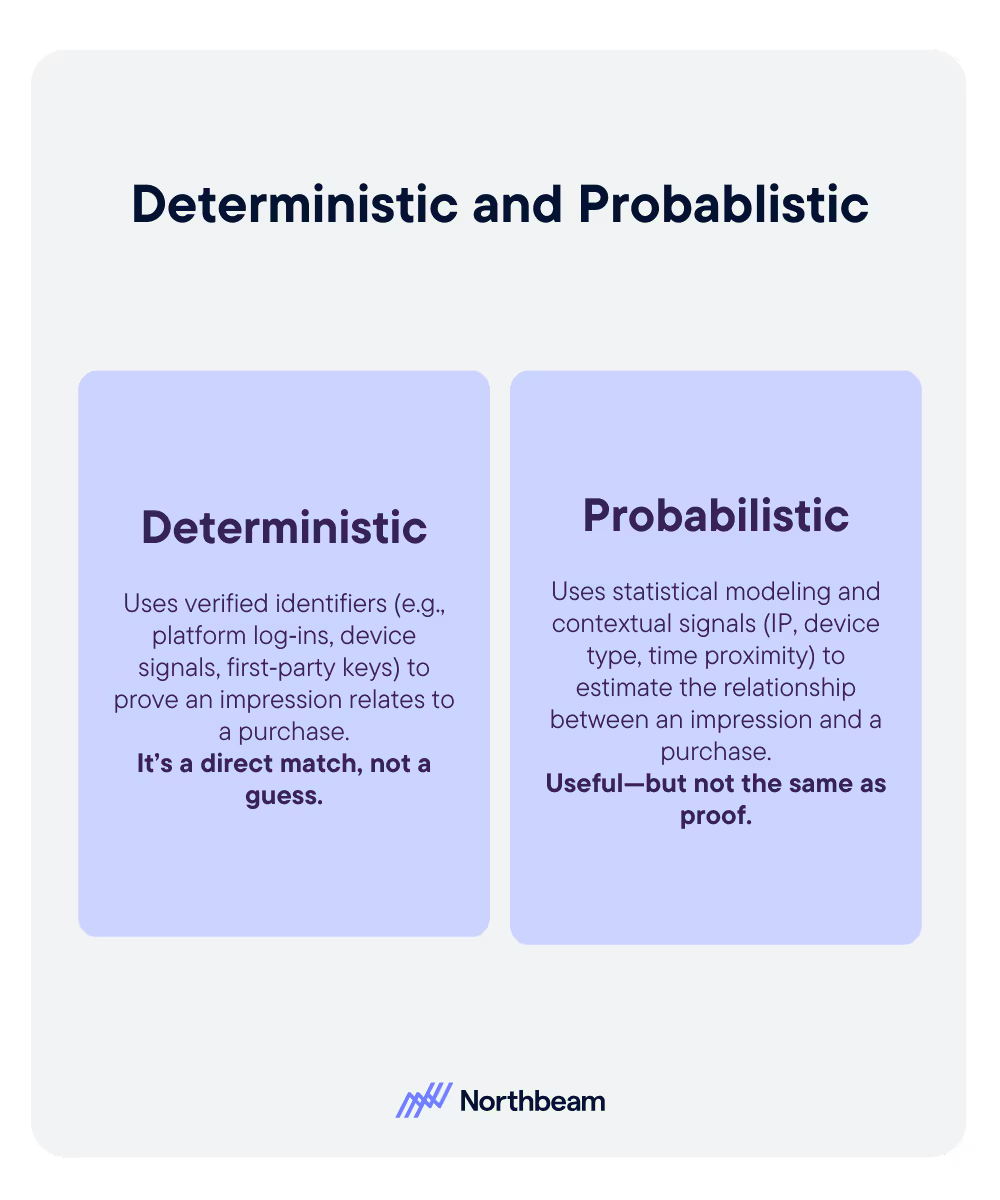
Deterministic views help close that gap because they:
- Reconcile to your actual ecommerce revenue, not a separate number
- Deduplicate credit across channels, so you’re not double-counting
- Make it clear why organic search and direct might lose credit when you reveal the upstream exposure that actually created demand
If you’re going to shift your attribution model, the most important work is up front: setting expectations that numbers will rebalance, agreeing on the windows that make sense by channel, and being transparent about why the story is changing, not just that it changed.
The brands I’m most bullish on are the ones willing to admit that clicks aren’t the full story, then do the hard work of operationalizing that truth in how they measure, report, and invest.
Takeaway 2: “View-through” only helps if the views are deterministic and reconciled to revenue
Most performance teams have a love/hate relationship with view-through metrics.
Everyone knows views matter. But “lift” that sits on top of already-inflated platform numbers is hard to defend in a room with your CFO.
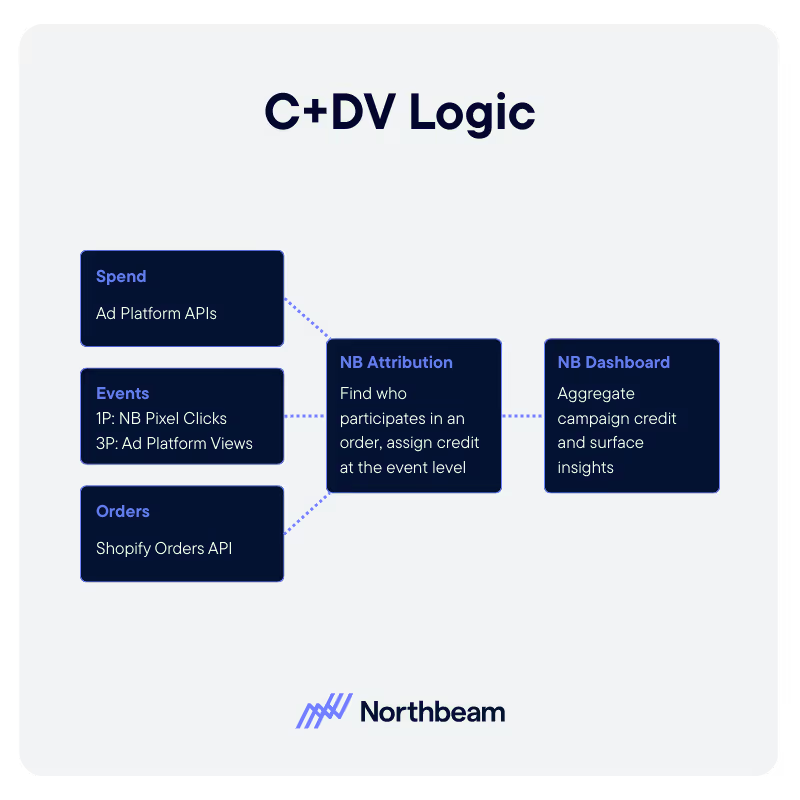
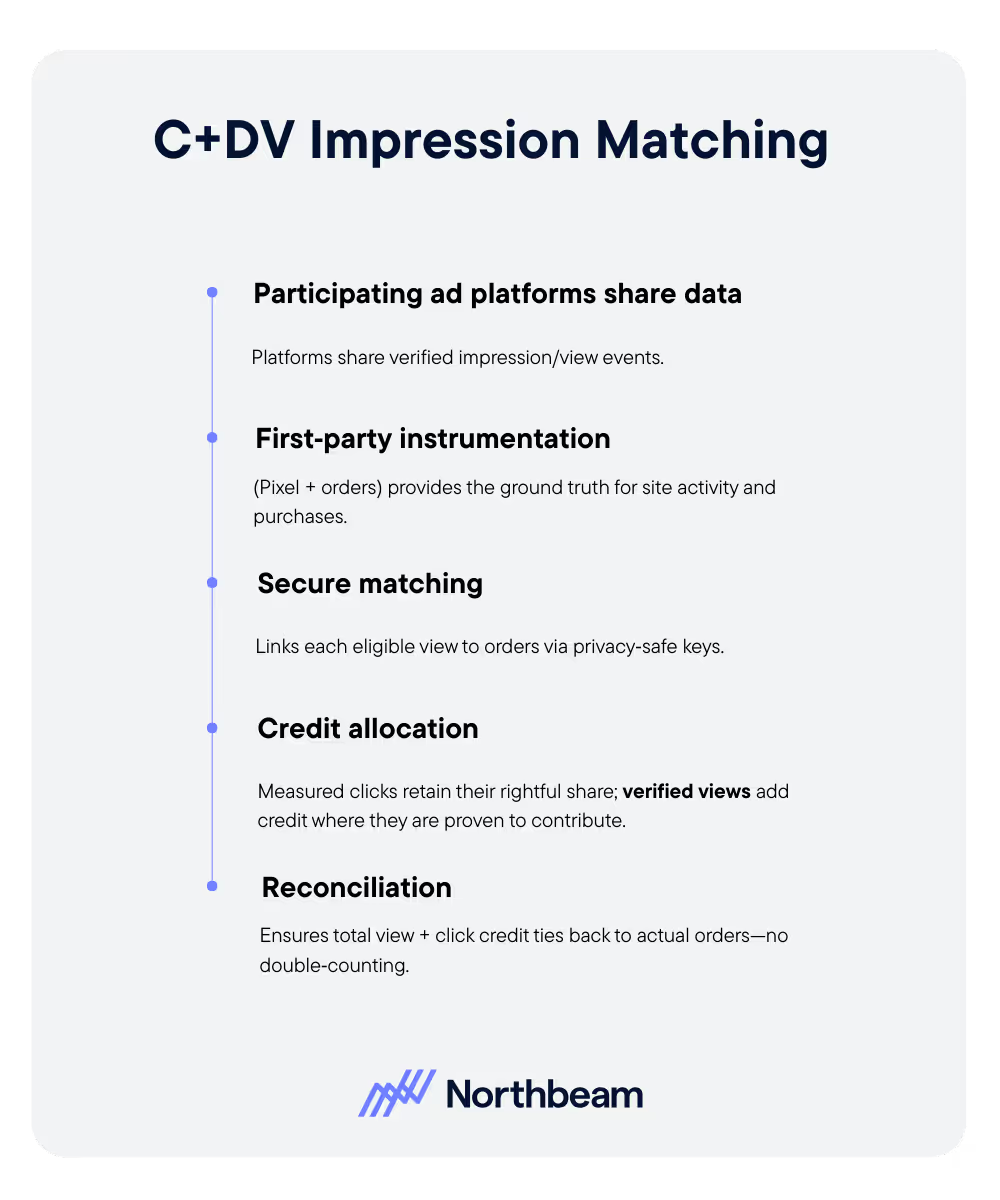
What we discussed on the webinar was a more grounded approach: deterministic views joined to real orders.
In practice, that means:
- Exposure captured by first-party data, and shared via what I like to think of as "cleanroom" integrations
- Matched back to actual orders via order IDs and hashed emails
- Joined at the user level, so each order has a concrete exposure history
That’s the core idea behind C+DV (Clicks + Deterministic Views):
- Keep the deterministic click backbone. Clicks don’t go away.
- Add only verified views from partner platforms. If we didn’t see it deterministically, we don’t use it.
- Reconcile everything to ecommerce revenue, fully deduplicated. Each order can only be worth 100% of itself, no matter how many touchpoints it had.
Done right, this turns “view-through” from a fuzzy add-on into a second layer on top of clicks that closes the gap between how people behave and what your reporting shows.
Takeaway 3: Upper-funnel channels, like CTV, are more undervalued than most teams think
Once you start layering deterministic views on top of clicks, a consistent pattern shows up:
- Campaigns that specialize in discovery and demand creation look meaningfully better than last-click tools suggested.
- Channels that were already doing heavy lifting (Meta, TikTok, Snap, Pinterest) gain share once their view-driven impact is visible.
- CTV moves from “brand line item” to measurable performance input. You can’t click your TV, so in a last-click system CTV basically didn’t exist. With deterministic views, you can finally see how often CTV shows up before the search, the retargeting impression, or the final click.
Lag analysis reinforces this. For CTV, one-day windows undercount badly; by the time you look at 7–30 day windows, CTV often shows up as one of the most important touchpoints in the path.
The exact lift will vary by brand and channel. The deeper point is structural: your current “single source of truth” is probably biased toward the bottom of the funnel. C+DV is one way of correcting for that by making genuine upper-funnel influence visible in the same framework as search and social.
Takeaway 4: When you see beyond the click, your creative and audience decisions change
A subtler, but important, impact is what happens to creative learning once you can see view-based influence.
In a last-click world, it’s rational to over-index on a small set of “safe”, hyper-clicky creatives and formats. Anything that does more upper-funnel work but fewer immediate clicks looks like a loser.
With deterministic views in the model, you can start to ask better questions:
- Which creative themes reliably show up early in high-value paths, even if they don’t win the last click?
- Which placements and environments (TikTok, Reels, Stories, Pinterest, Snap, CTV) are quietly seeding the audiences that later convert elsewhere?
- How should we evaluate creators and content partners when we can see their upstream influence, not just CTR?
That doesn’t mean clicks stop mattering. It means you finally have permission to invest in true discovery and storytelling, because you can see how those exposures pay off downstream across channels.
Takeaway 5: Clicks still matter, but they systematically miss the moments that create demand
Everyone on the panel saw the same story from a slightly different angle.
- A shopper sees a CTV ad, gets interested, and later searches the brand.
- They scroll past a TikTok video, save an idea on Pinterest, or watch a Story on Snap without clicking.
- Eventually they convert from a search ad or a direct visit days or weeks later.
If your source of truth only counts what got clicked, it’s going to:
- Over-weight the last touch
- Over-fund bottom-funnel
- Underestimate the channels that actually generate net-new demand
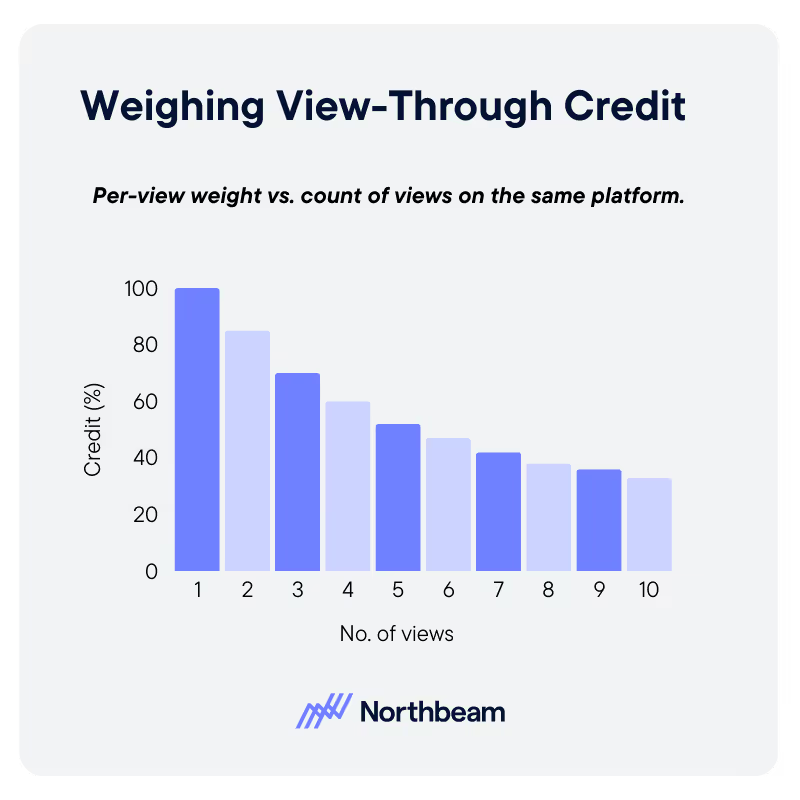
That’s true whether you’re Meta, TikTok, Pinterest, Snap, or a CTV partner like Mountain and Vibe. The journeys they see in-platform simply don’t line up with what last-click tools are crediting.
The final, simple takeaway: clicks are necessary, but no longer sufficient, as the backbone of your measurement.
Want to learn more about Clicks + Deterministic Views? Book a demo with us.




















































.avif)



















%25201.avif)

.avif)












.svg)
