




As privacy rules tighten and third-party cookies fade out, marketers are looking for reliable ways to reach the right people and measure what actually drives results; second-party data offers a practical path forward.
In this guide, we break down what second-party data is, why it matters, and how to integrate it into your performance and measurement workflows.
You’ll learn the core benefits, the steps to build a data partnership, how second-party data affects attribution accuracy, and the potential risks to watch for as you scale.
Most importantly, you’ll learn how to use partnerships to unlock better second-party audience data, clearer insights, and stronger returns with privacy top of mind.
What Is Second-Party Data & Why It’s Relevant
Second-party data is essentially another organization’s first-party data that you access through a direct, trusted partnership.
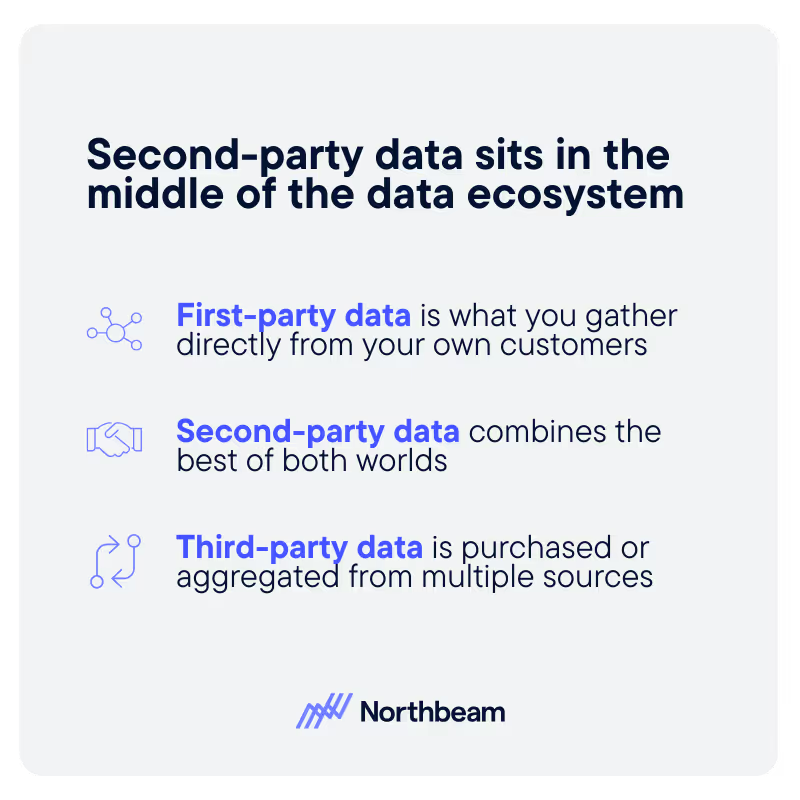
It sits in the middle of the data ecosystem:
- First-party data is what you gather directly from your own customers.
- Third-party data is purchased or aggregated from multiple sources and often loses fidelity along the way.
- Second-party data combines the best of both worlds.
You gain access to new audiences and behavioral signals, but with the clarity and provenance that third-party datasets typically lack.
This matters more than ever. With third-party cookies fading out and privacy regulations raising the bar on data governance, marketers need scalable ways to target effectively without compromising on accuracy.
From an attribution standpoint, the impact is even more meaningful. Higher match rates and cleaner identifiers reduce “unknown” traffic, improve funnel visibility, and help performance teams measure campaign outcomes with greater confidence.
In short, better data leads to better decisions, and second-party data delivers both the quality and context needed to get there.
Key Benefits & Use Cases of Second-Party Data
The benefits of second-party data partnerships center around new opportunities for marketers who want to scale intelligently while keeping data quality and governance front and center.
Here’s how to use second-party data for marketing campaigns:
Expanded Reach with Quality
Second-party partnerships give you access to high-intent audiences you wouldn’t reach on your own, without sacrificing signal quality.
Partner data comes with stronger identifiers, clearer consent, and more reliable behavioral signals. That makes it easier to target efficiently and avoid wasted spend.
Audience Enrichment and Lookalike Building
Because partner data often includes detailed attributes or engagement insights, it can enrich your existing segments and strengthen lookalike modeling. When your seed audiences improve, so does the performance of your acquisition campaigns.
Better Attribution and Journey Insight
Second-party data can fill critical gaps in your first-party view. If your customers interact with adjacent brands, publishers, or ecosystems before reaching you, partner data helps surface those touchpoints and clarify the full funnel path.
Co-Marketing and Shared Assets
Marketing data partnerships don’t stop at targeting. They enable joint campaigns, shared audience insights, and collaborative creative strategies. This can lead to lower acquisition costs, expanded brand equity, and a more unified customer experience across channels.
Competitive Advantage
Because many second-party relationships are exclusive or bilateral, they offer differentiation competitors can’t easily replicate. Access to unique, high-fidelity audiences often translates into better performance and a more resilient acquisition engine.
Framework for Acquiring & Deploying Second-Party Data
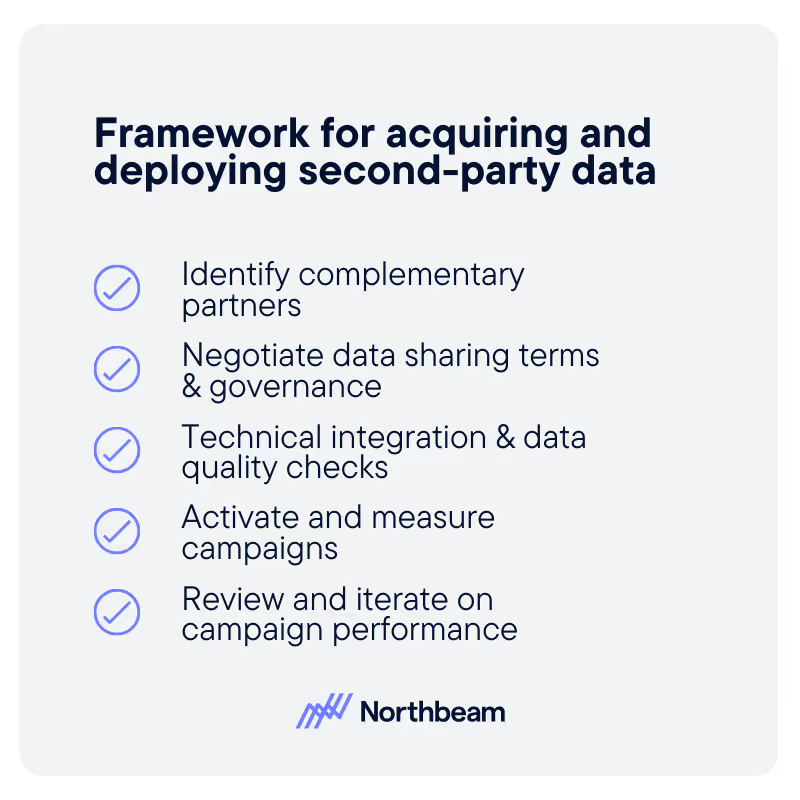
Here are the steps teams should follow to evaluate, integrate, and activate partner data with confidence.
Identify Complementary Partners
- Look for organizations whose audiences overlap with or complement your target customers, without being direct competitors.
- Clarify what types of data they hold (purchase behavior, loyalty activity, interest signals) and how those signals support your marketing objectives.
Negotiate Data Sharing Terms and Governance
- Establish clear contracts outlining what data will be shared, how it can be used, the duration of access, and all compliance requirements.
- Use clean rooms or secure data exchange frameworks when needed to preserve privacy and identity safety.
- Define usage rights, refresh cadence, success metrics, and reporting expectations upfront.
Technical Integration and Data Quality Checks
- Validate the partner’s data sources, formats, identifiers, segmentation logic, and match rates.
- Combine partner data with your first-party datasets (when privacy and consent allow) or use it to build new segment pools.
- Update your tracking and attribution systems so new data layers flow into audiences, measurement, and modeling.
Activate and Measure
- Build campaigns using second-party segments for bidding, enrichment, or lookalike expansion.
- Track performance against baseline first-party audiences to understand lift.
- Feed results back into attribution models to measure incremental conversions, ROAS impact, and reach extension.
Review and Iterate
- Continuously monitor how partner segments perform and whether their quality changes over time.
- Renew, expand, or replace partnerships based on results.
- Adjust your activation strategies (such as lookalike modeling or channel mix) using learnings from the pilot and ongoing performance.
Attribution & Performance Implications
Second-party data and attribution strategy can have an outsized impact on overall performance because they add clarity to parts of the customer journey that are normally opaque.
When you introduce partner-sourced identifiers and behaviors into your stack, match rates typically rise and audience definitions sharpen. That means fewer users fall into “unknown” buckets, giving your attribution models a more complete and accurate picture of how people move through the funnel.
This additional visibility matters most when partner data captures behaviors outside your usual domain.
If a customer engages with an adjacent brand or publisher before finding you, those touchpoints often disappear in a standard first-party view. With second-party data, you can track that interaction through to conversion and understand its true contribution to the path to purchase.
These new signals can also reshape how channels perform in your models. When previously invisible users become identifiable, conversion curves may shift, and channels that looked ineffective may reveal stronger influence.
It’s important to interpret these changes carefully. Not all improvements are inherently incremental, and partner audiences can introduce bias if left untested.
The most reliable approach is to use control groups, lift studies, or holdout tests to confirm the real, incremental impact of second-party data on performance.
Challenges, Risks, & Best Practice Considerations
Without valid consent frameworks, partner alignment, and proper documentation, even high-quality data can introduce legal and reputational risk.
Here are some challenges and best practices to consider:
Data Quality and Freshness
Partner data isn’t automatically reliable.
Audits are still essential to check for outdated records, inconsistent identifiers, or misaligned segmentation. Stale or noisy data can derail targeting, inflate acquisition costs, and lead to misleading insights.
Technical Integration Complexity
Integrating partner datasets requires precise matching logic, consistent identifiers, and alignment across schemas.
Attribution and analytics pipelines may need updates to properly ingest and model new data layers. Small mismatches can create major downstream errors.
Partner Misalignment
If the partner’s audience doesn’t overlap meaningfully with your target customers, performance will lag. Alignment should be evaluated early through audience comparisons, shared goals, and a clear understanding of what behaviors or attributes each side contributes.
Over-Dependence on a Single Partner
Relying heavily on one data partner can create operational and strategic vulnerability. Diversification reduces the risk of data degradation, partnership changes, or cost escalations affecting performance.
Elevated Governance Requirements
Second-party data should be governed with the same rigor as your first-party data. Maintain clear documentation, lineage tracking, quality standards, and dashboards that monitor performance and usage.
Strong governance ensures long-term reliability and trust across teams.
Case Study: Second-Party Data in Practice
Let’s see the value of second-party data by looking at how a consumer brand could partner with a publisher in an adjacent, non-competitive niche.
In this case, the publisher had a highly-engaged subscriber base with strong behavioral signals like content interests, purchase intent markers, and consistent on-site activity.
Through a direct data partnership, the brand gained access to a curated segment of these engaged users and used it to build targeted ad campaigns.
Once activated, the difference was immediate.
Match rates increased because the partner’s identifiers were clean and consented, and cost per acquisition dropped compared to the brand’s standard prospecting audiences.
In attribution reporting, the partner-derived segment converted at a materially higher rate and incremental ROAS outperformed baseline audiences by a meaningful margin. Those early signals gave the team confidence to scale spend and shift more budget toward the high-performing segment.
The full funnel told an even clearer story.
Partner data informed the audience build, the audience powered targeted ads and remarketing flows, and those campaigns fed clean, trackable conversions back into the attribution model.
That closed loop from data to activation to insight allowed the brand to refine strategy, allocate budget more efficiently, and grow performance with far greater precision.
Get Started with Second Party Data
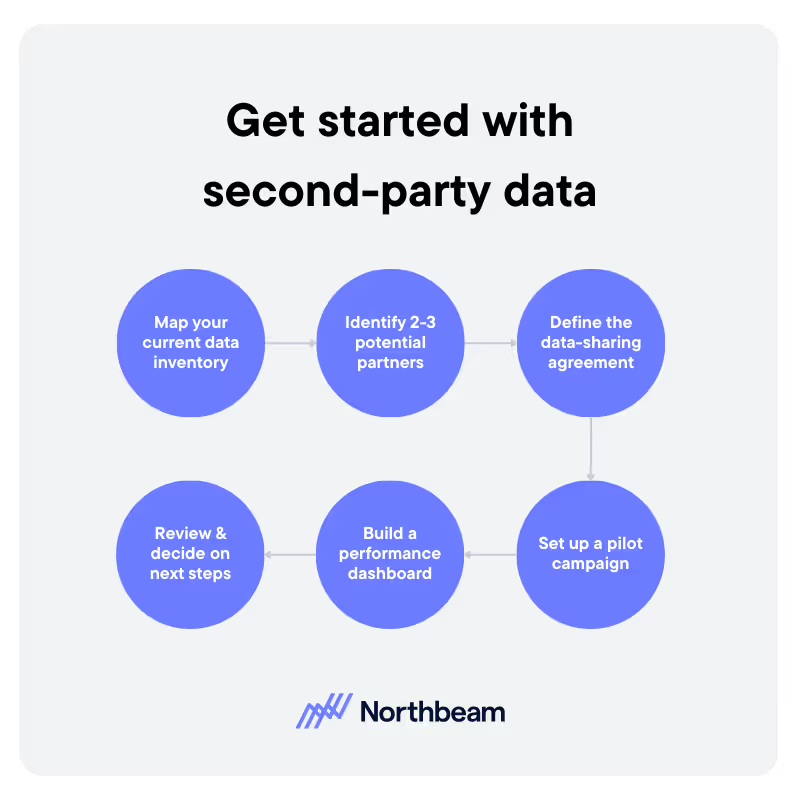
To help your team move from theory to execution, here are clear next steps for evaluating, piloting, and scaling a second-party data partnership:
- Map your current data inventory. List all first-party, third-party, and potential second-party sources to understand where partner data can add the most value.
- Identify 2-3 potential partners. Look for organizations whose audience signals align with your marketing objectives, and begin exploratory conversations about partner data sharing.
- Define the data-sharing agreement. Clarify what data will be exchanged, how it can be used, compliance requirements, usage rights, and the success metrics you’ll measure against.
- Set up a pilot campaign. Select one partner dataset, build an audience segment, activate it across your media stack, and measure performance relative to your baseline segments.
- Build a performance dashboard. Track metrics like match rate, conversion rate, CPA, incremental lift, and ROAS to understand real impact.
- Review and decide on next steps. After the pilot, determine whether to scale the partnership, refine the approach, or test a new partner, and document learnings to guide future work.
Taken together, these steps create a structured path for safely testing second-party data while building confidence in its long-term value.
Elevate Your Data Strategy
Second-party data gives marketing and attribution teams a powerful way to boost targeting accuracy, improve measurement, and expand reach without sacrificing governance or data quality.
By partnering with trusted organizations, you gain access to high-fidelity signals that strengthen modeling, clarify the customer journey, and unlock new performance opportunities. The key is to approach these partnerships with intention: from evaluating alignment and defining governance to testing, measuring, and iterating your way into a scalable strategy.
Used well, second-party data can become a durable advantage in an increasingly privacy-first world.




















































.avif)























%25201.avif)


.avif)












.svg)
