




Digital advertising often feels instantaneous, but every ad impression passes through a complex operational process before it ever reaches a user.
Ad operations ensures that ads are delivered correctly, tracked accurately, and measured reliably. Understanding ad ops is critical for attribution and marketing teams to diagnose performance issues, reduce wasted spend, and make more confident optimization decisions.
What Is Ad Operations & Why It Matters
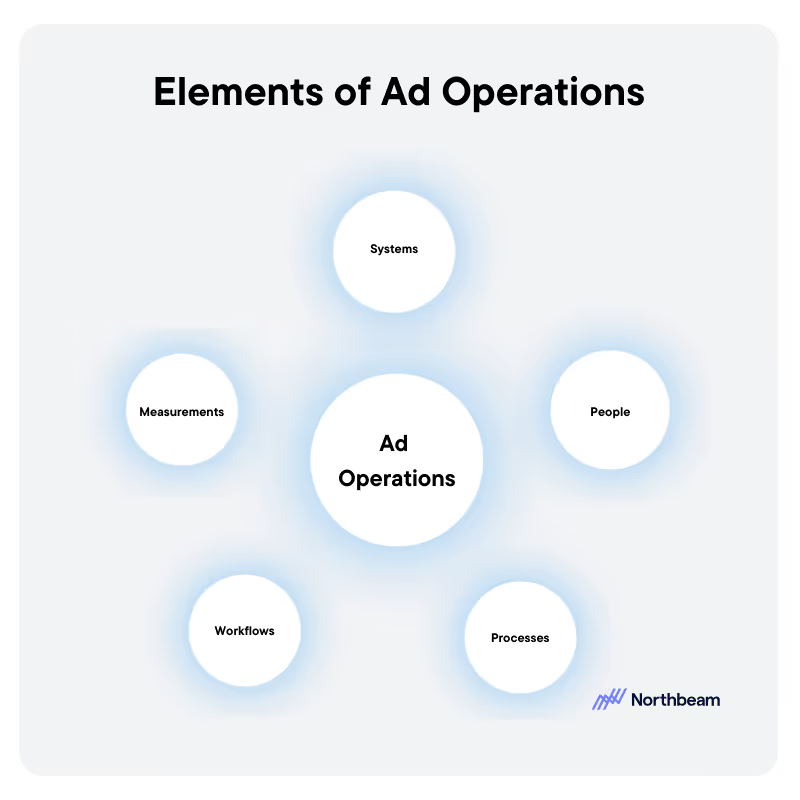
Ad operations, often shortened to ad ops, is the behind-the-scenes function that makes digital advertising actually work. While media strategy defines who you want to reach and creative defines what they see, ad ops ensures those ads are delivered correctly in the real world.
It is the combination of systems, people, and processes responsible for trafficking campaigns, serving ads to the right audiences, applying the correct formats and specifications, and making sure every impression, click, and conversion is tracked as intended.
When ad operations break down, performance suffers in ways that are not always obvious at first. Ads may serve in the wrong sizes or placements, miss intended audiences, fail to pace properly against budget, or fire incomplete or incorrect tracking tags.
These issues can lead to under-delivery, wasted spend, or data gaps that distort performance reporting. Even strong creative and smart targeting cannot compensate for delivery or tracking errors introduced at the operational level.
For marketing and attribution teams, ad ops is foundational. Attribution models, conversion paths, and cost metrics are only as reliable as the delivery and tracking infrastructure beneath them.
Strong ad operations create the conditions for trustworthy measurement, better optimization decisions, and tighter control over acquisition costs.
Key Steps in the Digital Ad Delivery Workflow
Digital ads do not simply “go live” once a campaign is approved. Each impression passes through a defined operational workflow that determines where, when, and how an ad is delivered, as well as whether its impact can be accurately measured.
Campaign Setup & Trafficking
- Intake of the campaign brief or insertion order, including targeting requirements, budget, flight dates, and performance goals.
- Upload of creative assets into the ad server or buying platform, with correct sizes, formats, and specifications applied.
- Configuration of targeting parameters, pacing rules, and scheduling.
- Implementation of ad tags, click URLs, tracking parameters, and attribution identifiers to ensure downstream measurement.
Ad Serving & Delivery
- Use of an ad server or ad-tech platform, such as a DSP or SSP, to serve ads when a user meets the defined targeting criteria.
- In programmatic environments, real-time bidding and exchange auctions occur in milliseconds to determine which ad is shown.
- Ongoing monitoring of delivery health, including impressions served, viewability, and pacing against budget.
Monitoring, Optimization, & Quality Assurance
- Continuous review of delivery performance to identify under-delivery, over-delivery, placement issues, or creative errors.
- Optimization actions such as refining audiences, swapping creatives, or reallocating budget to improve results.
- Application of ad quality controls and fraud detection to maintain brand safety and eliminate invalid traffic.
Reporting & Data Integration
- Flow of delivery and engagement data from ad servers and tracking tags into analytics and attribution systems.
- Linking of impressions and clicks to downstream conversions for attribution analysis.
- Use of delivery insights and tracking gaps to inform improvements in future campaigns.
Key Systems, Roles, & Technologies in Ad Ops
Ad operations sits at the intersection of technology and execution, relying on a complex stack of platforms and specialized roles to ensure campaigns run smoothly.
At the core are ad servers, which store creative assets, apply targeting rules, and govern when and how online ads get delivered.
Around them sit demand-side platforms and supply-side platforms, which connect advertisers and publishers through ad exchanges, enabling programmatic buying and real-time auctions.
Tag management systems, tracking pixels, and attribution tools then capture delivery and engagement data, feeding it into analytics and measurement stacks.
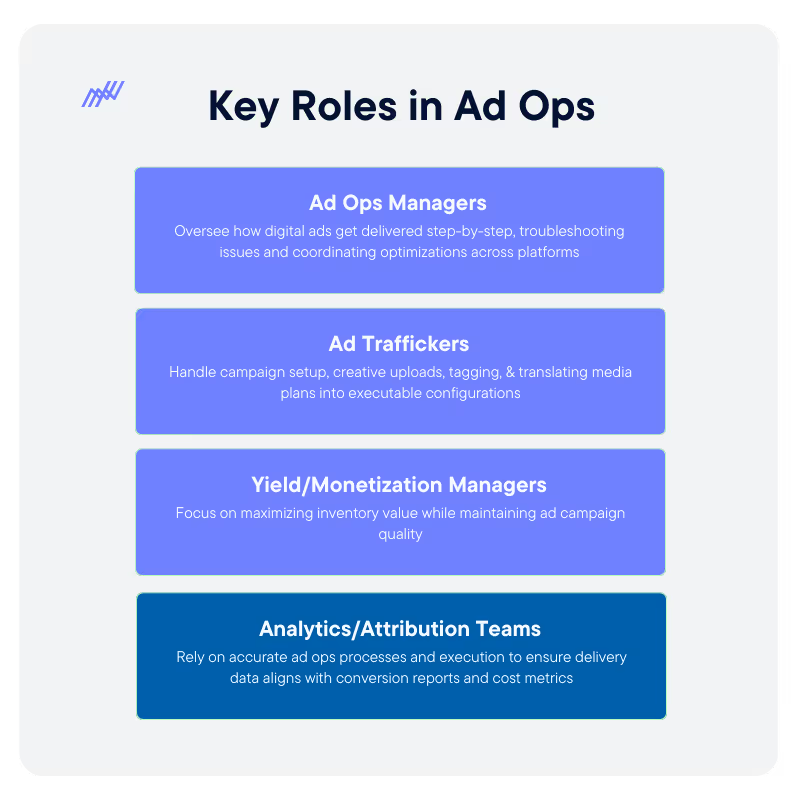
Supporting this technology are distinct operational roles:
- Ad traffickers handle campaign setup, creative uploads, and tagging, translating media plans into executable configurations.
- Ad operations managers oversee how digital ads get delivered step-by-step, troubleshooting issues and coordinating optimizations across platforms.
- On the publisher side, yield or monetization managers focus on maximizing inventory value while maintaining quality.
- Analytics and attribution teams rely on accurate ad ops process and execution to ensure delivery data aligns with conversion reporting and cost metrics.
This ecosystem also introduces ongoing technical challenges. Cross-device and cross-browser delivery make it difficult to consistently identify users and connect impressions to outcomes.
Programmatic complexity, including header bidding and multi-exchange paths, increases the number of systems involved in each impression. Integrating these platforms with analytics and attribution tools adds another layer of risk, where small configuration errors can lead to missing or misaligned data.
Strong ad operations practices help teams navigate this complexity and maintain reliable delivery and measurement at scale.
Common Ad Ops Challenges & Attribution Implications
Understanding these common challenges helps marketing and attribution teams recognize when performance problems stem from execution rather than strategy or creative:
Delivery Issues That Affect Measurement
Under-delivery, creative disapprovals, incorrect formats, or misconfigured targeting can prevent campaigns from reaching their intended audiences. Pacing issues may cause spend to accelerate or stall unexpectedly, distorting impression volume and reach.
When ads do not serve as planned, performance metrics are skewed, making it difficult to evaluate true effectiveness or compare results across channels.
Tracking & Attribution Gaps
If impressions, clicks, or post-click events are not consistently tagged and captured, attribution models break down. Missing or incomplete delivery data can lead to mis-credited channels, underreported conversions, or inflated costs.
These gaps create false signals in reporting and reduce confidence in ROI, CPA, and conversion path analysis.
Programmatic Complexity
Programmatic buying introduces multiple intermediaries, automated auctions, and dynamic inventory sources. While this enables scale and efficiency, it also increases the risk of ads appearing in unintended contexts or on low-quality inventory.
Without strong ad ops oversight, these placements can harm brand safety and introduce noise into attribution data.
Data Latency & Freshness
Delayed or slow data flows limit a team’s ability to optimize in near real time. When delivery and conversion data arrive hours or days later, optimizations lag behind performance, and attribution insights become less actionable.
Strong ad operations practices reduce these issues, supporting more accurate cost-per-acquisition, ROAS, and attribution modeling.
Ad Delivery in Action: From Impression to Attribution
To see how ad operations connect delivery and measurement, consider this example of a brand launching a display campaign via a demand-side platform.
The campaign begins with setup. Targeting criteria are defined, creative assets are uploaded in the required sizes, and tracking tags and attribution parameters are applied. Once the campaign goes live, the DSP begins bidding on available inventory through ad exchanges.
When a user who matches the targeting criteria visits a publisher’s site, an automated auction takes place in milliseconds. If the brand’s bid wins, the ad is served. At that moment, impression-level tracking fires, recording where and how the ad was delivered.
If the user clicks the ad, additional tracking captures engagement. If they convert later, whether that is a purchase, signup, or download, attribution systems connect that conversion back to the original impression or click.
Throughout the campaign, the brand’s ad ops team monitors delivery data alongside quality metrics. If a specific placement shows low viewability or a high bounce rate, they may pause or exclude it from the buy. That adjustment improves the quality of future impressions, reduces wasted spend, and strengthens the signal flowing into attribution reports.
In this way, ad operations does not just ensure ads are served. It actively shapes the accuracy of performance reporting and the effectiveness of ongoing optimization.
Actionable Next Steps for Marketing & Attribution Teams
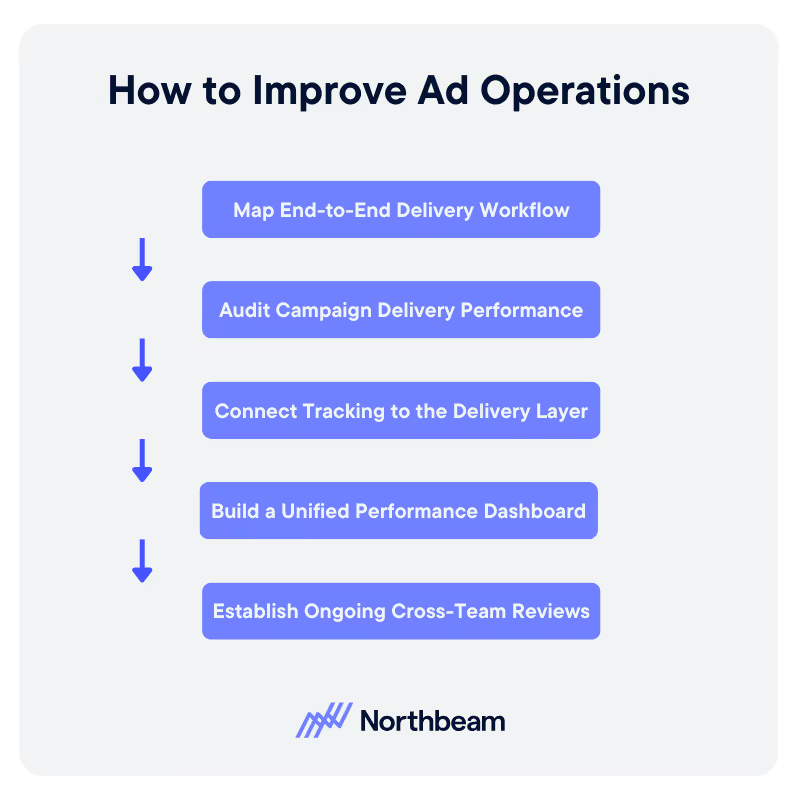
Improving ad operations does not require rebuilding your entire tech stack. Small, deliberate changes to process, visibility, and collaboration can significantly improve delivery reliability and attribution accuracy.
1. Map Your End-to-End Delivery Workflow
Work with your ad ops or ad tech partners to map out the ad operations workflow for marketers. Document the entire lifecycle of a campaign, from initial brief and creative development through trafficking, delivery, tracking, and attribution. This exercise helps surface handoff points where errors or data loss are most likely to occur.
2. Audit Campaign Delivery Performance
Review recent campaigns for recurring delivery issues such as under-delivery, low pacing, creative rejections, or incorrect formats. Identify how often these problems occur and assess how they may have distorted impression volume, reach, or reported performance.
3. Connect Tracking to the Delivery Layer
Confirm that ad impressions, clicks, and tracking parameters are consistently passed from ad servers into analytics and attribution systems. Gaps between delivery data and conversion reporting often signal tagging or integration issues that undermine measurement.
4. Build Unified Delivery and Performance Dashboards
Create dashboards that combine delivery health metrics, including impressions delivered versus forecast, viewability, delivery latency, and creative failures, with core performance KPIs such as CPA and ROAS. Seeing these metrics together enables faster diagnosis of performance issues.
5. Establish Ongoing Cross-Team Reviews
Set a regular cadence for ad ops, media buying, and attribution teams to review delivery quality, optimization decisions, and measurement integrity. Consistent collaboration helps prevent small operational issues from becoming costly reporting problems.
Why Ad Operations Is an Advantage
Ad operations is often invisible when everything works, but it plays a decisive role in whether performance data can be trusted.
Every impression served, every click tracked, and every conversion attributed depends on the systems and processes that govern ad delivery. When ad ops is treated as a strategic function, teams gain clearer insight into what is actually driving results.



































































.avif)




























%25201.avif)


.avif)














.svg)
