



The five days from Thanksgiving through Cyber Monday have a shape you can count on: a decisive lift into Black Friday, a natural cool‑off on Saturday and Sunday, and a measured rebound on Cyber Monday.
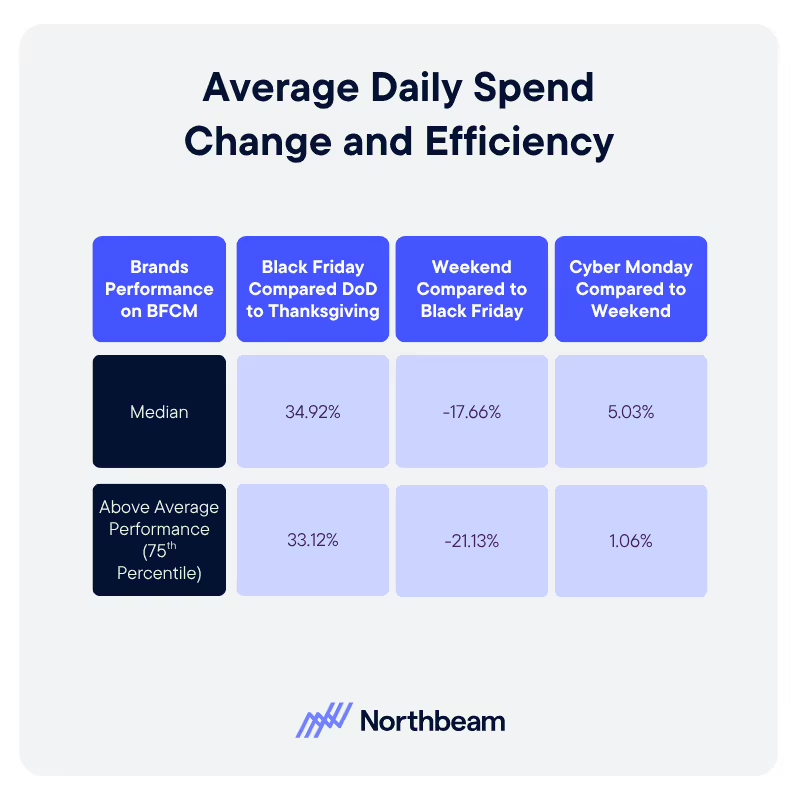
In Northbeam’s aggregate read from 2024, median brands increased daily spend roughly one‑third from Thanksgiving to Black Friday, pulled back about a fifth across the weekend, and added back a modest ~5% on Monday.
On efficiency, median MER jumped into Black Friday, dipped over the weekend, then recovered by ~19% on Monday versus the weekend. These are medians across the portfolio, not single‑brand anecdotes—which is why they’re useful as pacing guardrails for 2025.
Black Friday’s spike is the harvest of intent seeded earlier; the weekend lull is normal, not an indictment of your offer; and Monday’s rebound is real, just typically smaller than Friday’s peak.
If you build your spend ladders and decision windows around that arc, you avoid the budget whiplash that comes from reacting to every wobbly 1‑day metric in the moment.
This article serves as a part companion piece to a webinar I hosted about Black Friday. You can see the full recording of the webinar here:
What the Data Actually Says
Let’s be explicit about the 2024 baselines:
- Median daily spend moved ~+34.9% from Thanksgiving to Black Friday, fell ~−17.7% across the weekend, then rose ~+5.0% on Cyber Monday.
- Median MER climbed ~+38.1% from Thanksgiving to Black Friday, dipped over Saturday/Sunday, and rebounded ~+19.5% on Monday versus the weekend.
Those moves are durable enough to pre‑commit your day‑by‑day budgets without waiting for in‑window drama to dictate your plan.
Why the Week Takes this Shape
Paths to purchase lengthen around BFCM. A pure 1‑day read under‑credits the prospecting and mid‑funnel work you did in the lead‑up, while last‑click pull gets louder under sale pressure.
On Friday, capture surges at the same time earlier touchpoints mature; by Saturday/Sunday, the initial wave cools; on Monday, lagged impact and lifecycle channels (Email/SMS) push efficiency back up.
Set your windows in advance and you’ll see the shape clearly instead of second‑guessing it.
A Pacing Plan Built on the Pattern
Start by treating Thanksgiving as your runway and Friday as your step‑change.
Pre‑approve about a one‑third lift into Black Friday—aligned to the median MER jump—and use MMM (if you have it) to set channel‑level caps so you don’t run past diminishing returns in the heat of the moment. This removes debate from the biggest move of the weekend.
On Saturday and Sunday, plan a controlled pullback of roughly 17–20% versus Friday while you protect demand creation.
Keep capture lanes (Brand/Shopping/retargeting) fully covered, but preserve prospecting budgets that pay back on multi‑day windows; cutting too deep on the weekend is how teams accidentally starve Monday’s rebound.
For Cyber Monday, lean in, don’t lunge.
Median brands added back only a small slice of weekend spend (~5%), while many top performers simply held near weekend levels and let lagged impact do more of the work. Think control, not heroics.
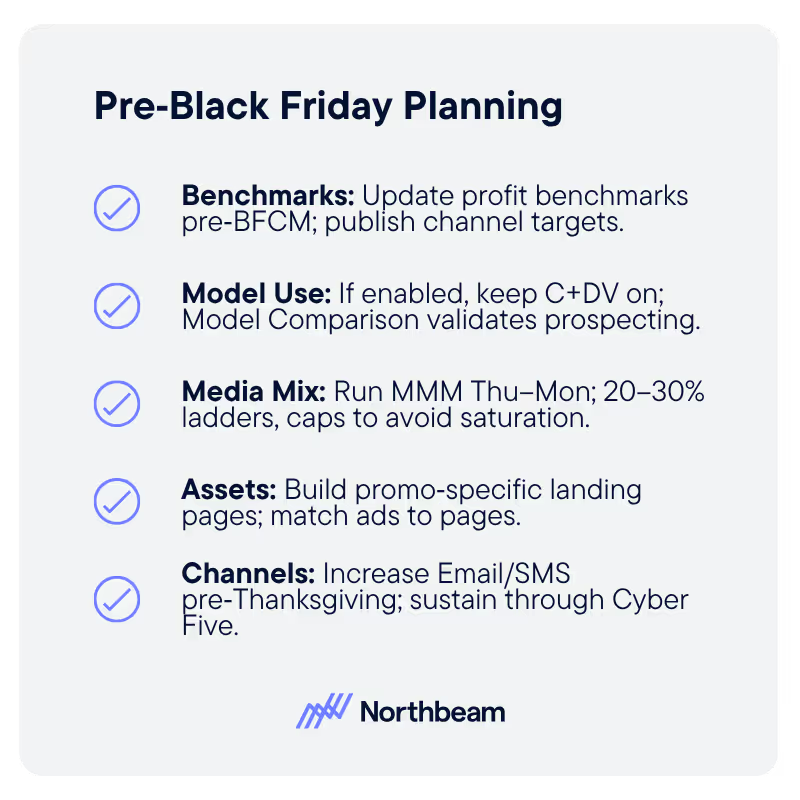
Operationally, publish profit/MER targets and channel stoplights for Fri–Mon, then schedule two refreshes (pre‑Thanksgiving and post‑Black Friday) so “what good looks like” stays current without moving the goalposts mid‑stream.
How to Read Performance In Real Time
A strict 1‑day view is misleading during BFCM. Make your decision windows the guardrail: optimize capture on short windows; require 7/14/30‑day corroboration for prospecting before you move meaningful budget. Expect more last‑click pull and resist reflexive reallocations that rob demand creation to feed capture.
Use hourly views only where you have real volume (Meta, Google). For smaller channels, rely on 1/3/7‑day trends—there isn’t enough hourly signal to justify surgical changes—and always check data‑freshness indicators before shifting budgets.
If you’ve enabled Clicks + Deterministic Views (C+DV), keep it in your model comparison throughout the window. View‑heavy upper‑funnel often looks soft on 1‑day clicks while C+DV over multi‑day windows shows real contribution; that’s your permission to hold or scale without starving the top of the funnel.
What “Good” Looked Like Under the Hood Last Year
Two calibrators from 2024 can keep your expectations grounded in 2025:
- Segment timing: During BFCM, first‑time customer revenue is heavily same‑day (median ~73%), while blended on‑day impact sits just under 60% given the returning base’s lag. That split argues for segment‑specific targets and windows—don’t force a single blended rule on both audiences.
- Creative and site response: Median CTR and conversion rate improved materially over the Cyber Five window when ad creative and promo‑specific landing pages were tightly aligned. Ship those assets early—they’re part of why Friday spikes and Monday rebounds.
The Bottom Line
Plan to the shape the market keeps giving you: a firm step into Friday, a disciplined weekend pullback that preserves demand creation, and a measured Monday re‑lean.
Align spend to the median MER moves we saw in 2024, publish stoplights, and read performance through windows that reflect how Cyber Five actually converts.
That’s how you move fast and stay profit‑first through the most volatile week of the year.
To watch the full webinar, click here.























































.avif)
























%25201.avif)


.avif)













.svg)
