




Marketing funnels are more complex than ever, and manual workflows can’t always keep up with how people move between channels and touchpoints.
Automation offers a way to guide prospects through the journey with consistent, timely interactions while generating the structured data you need to measure what works and scale efficiently.
This guide walks through how to automate your marketing funnel for scale in order to give you a practical framework you can use immediately, whether you’re building a new automated funnel or improving one already in place.
Why Automate Your Marketing Funnel & What It Enables
Marketing funnel automation strategy involves using tools and workflows to move prospects from awareness to retention with as little manual work as possible while still giving each person a personalized experience.
The core benefit is efficiency. An automated marketing funnel supports growing demand without requiring your team to scale at the same pace.
It handles repetitive tasks, routes leads based on rules, and delivers nurture messages automatically. That frees your team to focus on strategy, testing, and high value interactions.
Automation also brings consistency and faster response times. When workflows trigger based on behavior, there is no lag between a prospect taking an action and your system responding. The result is a smoother customer experience and fewer missed opportunities.
Finally, automated engagement funnels for paid media and attribution also improve tracking and clarity. Automated funnels generate reliable, structured touchpoints that feed into your measurement stack. Every form submit, nurture step, retargeting trigger, and workflow event is captured and tied to downstream conversions.
For teams using attribution or multi touch modeling, this level of completeness matters. It provides a more accurate picture of how users move through the funnel, what actually influences conversion, and where to invest next.
Mapping the Funnel & Identifying Automation Opportunities
A well-automated funnel starts with a clear understanding of how people move from first touch to long-term engagement.
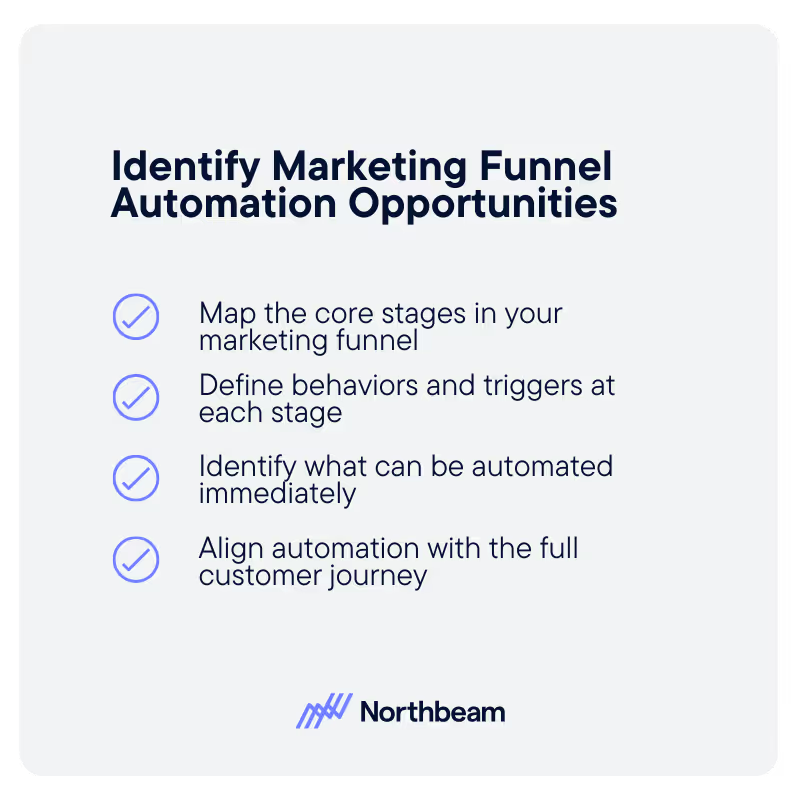
Map Your Core Funnel Stages
Start by outlining the major steps in your marketing journey. A common structure might be: Paid Ad, Lead Capture, Nurture Sequence, Conversion, and Retention.
Define Behaviors and Triggers at Each Stage
Identify which meaningful actions happen within each stage. Examples include ad clicks, form submissions, content downloads, email opens, and product page views.
Add entry and exit criteria so you know when someone has truly progressed. Micro conversions like scroll depth or repeat visits help you understand intent.
Identify What Can Be Automated Immediately
Pinpoint the workflows that can run without human involvement. For example:
- Lead capture and qualification rules can send new contacts straight to your CRM
- Nurture sequences can trigger based on behavior and deliver timely email, in-app, or retargeting messages
- Cross-channel retargeting can reflect real funnel movement or drop off patterns.
Identify Where Humans Still Add Value
Not every step benefits from automation. High intent demos, complex outreach, or sales conversations require context and judgment. Mark these moments clearly so automation supports your team rather than replaces essential human touch.
Align Automation to the Full Customer Journey
Once stages, triggers, and responsibilities are in place, ensure your systems pass users smoothly from one step to the next.
Automated actions should set up human interactions, and human interactions should feed back into automated tracking. This keeps your funnel coherent, measurable, and ready for scale.
Building the Automation Workflow & Measurement Plan
Once your funnel stages are clear, the next step is building an automation system that responds to real user behavior and produces reliable, measurable data.
Choose the Right Tools and Integrations
Start by selecting the platforms that will power your automated funnel. Most teams rely on a marketing automation platform, CRM, ad platforms, analytics tools, and an attribution system.
Design Clear Workflow Logic
Define the rules that determine how users move through your automation:
- Set behavior triggers like page visits, ad clicks, or content downloads
- Add segmentation and branching rules that adjust messages based on source, engagement, or lead value
- Map out automated messaging and retargeting sequences
- Establish lead scoring thresholds so high intent users can be handed to sales at the right moment
Instrument Your Funnel Events
List the key events that matter for both automation and attribution. This usually includes impressions, clicks, form submits, nurture engagements, and conversions. Ensure each event is captured in a consistent, structured way so it can power both your workflows and your reporting.
Align Automation with Your Attribution Model
Connect each workflow step to your attribution system. This allows you to trace a user from their first touch through the automated journey and view the full impact of your funnel on pipeline and revenue.
Build Dashboards for Visibility
Create dashboards that highlight funnel flow, drop off points, workflow engagement, lead progression, conversion rates, and ROAS. These help you monitor performance at a glance.
Plan for Continuous Optimization
Schedule regular reviews to identify bottlenecks, test timing or sequencing changes, and compare variations of nurture content. Your automation should evolve based on data, not remain static.
Scaling Engagement With Marketing Funnel Automation Without Losing Personalization
Here’s how to expand your reach without sacrificing the personal touch that moves users through the funnel.
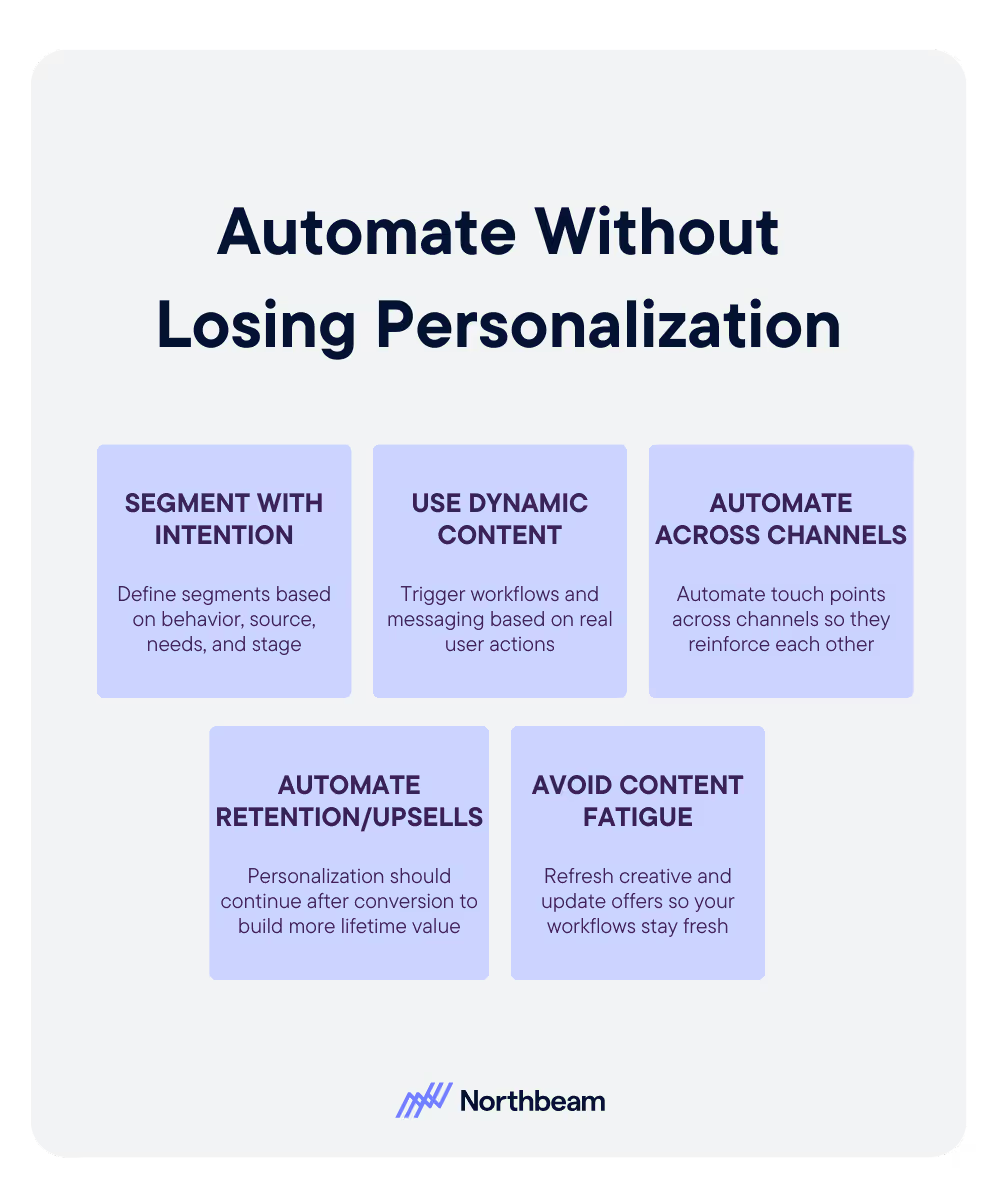
Segment Your Audience With Intention
Start by defining meaningful segments based on behavior, source, needs, or lifecycle stage. Tailor each workflow to the user’s context so they receive messages that reflect what they care about, not a generic sequence.
Use Behavior-Based Triggers and Dynamic Content
Trigger workflows based on real actions like repeat visits, content engagement, or product exploration. Dynamic content lets you adjust messaging automatically, showing different offers or creative to users based on their past behavior.
Orchestrate Cross Channel Automation
Automate touchpoints across ads, email, in app interactions, and SMS so that each channel reinforces the others rather than competing.
When a user downloads a guide, for example, they might receive a follow up email, and see aligned retargeting ads. The experience should feel coordinated, not chaotic.
Automate Retention and Upsell Flows
Personalization should continue after conversion. Build sequences for onboarding, loyalty rewards, engagement automation, and upsell opportunities. These workflows help you extract more lifetime value and keep users active.
Monitor and Refresh Content to Avoid Fatigue
At scale, even strong sequences can start to lose impact. Watch for falling open rates, rising unsubscribes, or declining conversion rates. Refresh creative, rotate offers, and update triggers regularly so your automated funnel stays relevant.
Attribution & Performance Monitoring in an Automated Funnel Context
Automation adds scale and consistency to your funnel, but it also creates more touchpoints that must be tracked accurately.
Strong performance monitoring ensures you know which automated steps are driving real results, not just activity.
Capture Every Automated Interaction
Make sure your attribution system records all relevant events, including automated nurtures, retargeting impressions, message sends, and workflow steps.
Define Micro Conversions and Link Them to Outcomes
Identify the moments that signal meaningful progression, such as completing a nurture step, clicking a key CTA, or returning to your site.
Map these micro conversions to downstream outcomes like trial starts, demo requests, or purchases. This helps you understand not just who converts, but how they convert.
Use Holdouts to Prove Incremental Lift
Automation can create correlation without real causal impact. Introduce holdout or control groups that do not receive a specific workflow or message. Compare performance to determine whether your automation is truly adding lift or simply engaging users who would have converted anyway.
Measure Incremental ROAS Across the Funnel
Track improvements in cost per lead, conversion rate, and time to conversion for users who move through automated flows. Tie these gains to spend and revenue so you can quantify how automation affects return on ad spend and overall pipeline efficiency.
Monitor for Anomalies or Workflow Misalignment
High engagement but low conversion often signals an issue. You may have an ineffective message, a confusing branching path, or a retargeting loop that keeps users stuck.
Build automated reporting that flags these anomalies early so you can adjust before your funnel performance suffers.
Common Pitfalls & Automation Risks
Automation can accelerate your funnel, but it also introduces new risks.
Being aware of common pitfalls helps you build systems that scale cleanly rather than create more problems to solve:
Avoid Irrelevant or Poorly Segmented Flows
Automation only works when it speaks to the right people. Broad or mismatched segments lead to low engagement, higher drop offs, and unsubscribes.
Review your logic regularly to ensure each workflow matches user intent and lifecycle stage.
Balance Automation With Human Context
Too much automation can feel cold or scripted. Prospects will notice if every message feels templated.
Identify the moments where human judgment matters, such as high intent outreach or complex questions, and ensure workflows hand off gracefully to real people.
Connect Automation to Your Attribution Stack
If automated events are not tracked, you lose visibility into what actually drives conversions. This turns optimization into guesswork.
Make sure every workflow step is captured as a touchpoint so your attribution model can reflect the real user journey.
Break Down Data and System Silos
Disconnected tools create blind spots in your funnel. When your CRM, automation platform, analytics tools, and ad channels don’t share data, you can’t see where users are progressing or getting stuck. Integrations keep your workflows cohesive and your reporting accurate.
Monitor Scale Before Problems Grow
As you scale traffic and automation, small misalignments can become expensive quickly. Watch for rising CPL, stagnant conversion rates, or sudden drop offs that signal bottlenecks.
Refresh Content to Prevent Fatigue
Automated sequences lose effectiveness over time. Declining open rates or engagement indicate that messaging has gone stale.
Update creative, rotate offers, and adjust timing to keep your funnel feeling fresh and relevant.
Case Study: How a DTC Brand Scaled Engagement With An Automated Funnel
A DTC brand wanted to improve conversions from its paid social campaigns without adding more manual work.
They promoted a free downloadable guide as their main acquisition offer, and every download fed into a new automated workflow that combined a short email sequence, targeted retargeting, and a limited time purchase incentive.
Each step in the journey was tracked as a structured event. This gave the team a clear view into how users moved through the funnel and which touchpoints actually influenced conversions.
Leads who entered the automated workflow converted at twice the rate of standard leads and cost 30 percent less to acquire, since nurtures and retargeting were triggered based on real behavior.
Because workflow events were synced with their attribution model, the team could see which ad channels delivered the most engaged leads.
They reallocated budget toward audiences that consistently fed high quality traffic into the workflow and improved ROAS without increasing spend.
As volume grew, they expanded the automation into a simple multi-channel sequence using ads, email, and SMS.
The larger dataset revealed a bottleneck in the nurture journey, where many users dropped off around the third email. After testing new timing and creative, they recovered a meaningful share of those lost conversions.
The combination of personalized automation and attribution visibility gave the brand a scalable, measurable path to growth, and a framework they could continue improving as they expanded.
Actionable Next Steps for Your Team
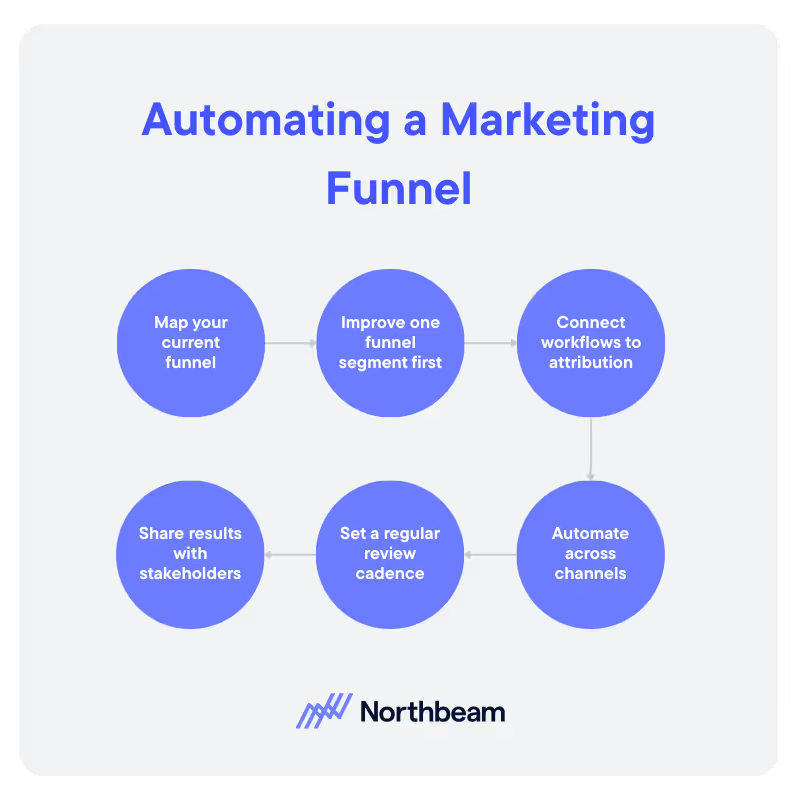
If you want to build a funnel that scales consistently and improves over time, start with a few high-impact steps:
1. Map Your Current Funnel
- Outline each stage and the key behaviors within it.
- Mark where automation already exists.
- Identify manual gaps that create delays or inconsistent follow up.
2. Improve One Funnel Segment First
- Choose a narrow portion of the journey, such as lead capture to nurture.
- Define its behavior triggers, messaging sequences, and exit criteria.
- Clarify the metrics that matter so you can measure progress.
3. Connect the Workflow to Your Attribution Stack
- Ensure every automated event (form submit, nurture step, retargeting trigger) is recorded as a touchpoint.
- Create a dashboard that shows workflow engagement, drop offs, conversion rates, and ROAS.
4. Expand Automation Across Channels
- Add coordinated touchpoints across ads, email, in app channels, and SMS.
- Make sure users experience a consistent journey even when switching devices or platforms.
- Track how each channel contributes to movement through the funnel.
5. Set a Regular Review Cadence
- Review automation performance monthly.
- Refresh creative, adjust timing, and test new variations.
- Scale what works and retire what does not.
6. Share Results With Stakeholders
- Communicate outcomes in business terms, not just engagement metrics.
- Highlight conversion improvements, cost per acquisition changes, and overall funnel velocity.
By improving one part of the funnel at a time and aligning automation with your attribution model, you create a system that gets smarter with every cycle.



































.avif)


















%25201.avif)

.avif)













.svg)
