




Which campaigns benefit most from C+DV? Prospecting, reach/traffic, and retention by the numbers
On view‑heavy platforms, people often discover you in feed or video and return later via search or direct to purchase.
Clicks-Only records a multi-touch lens, but doesn't account for the entire attribution process.
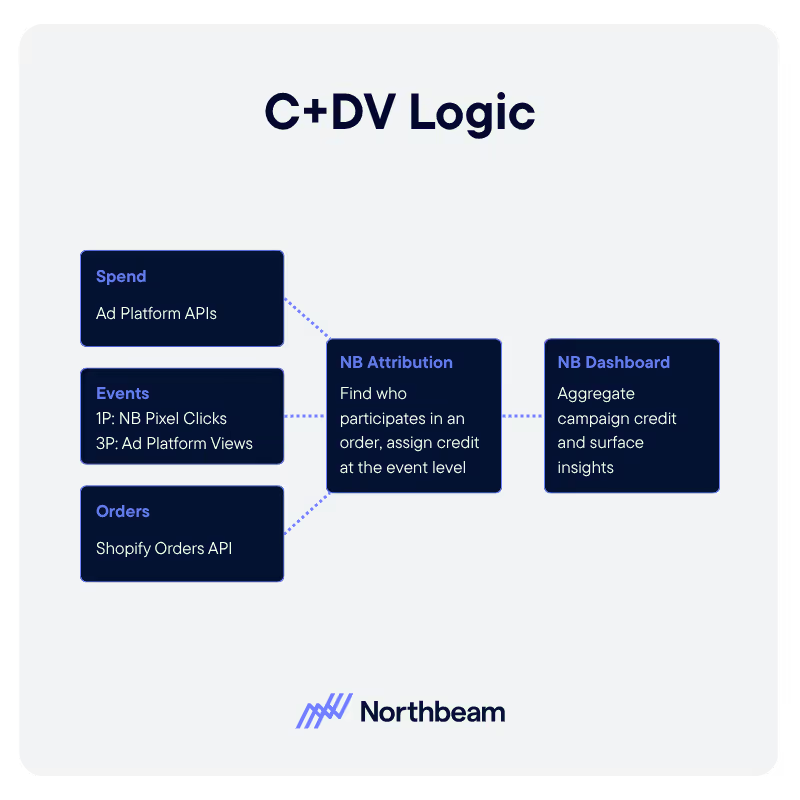
C+DV (Clicks + Deterministic Views) closes that gap by ingesting verified impression events from participating platforms and matching them one‑to‑one with orders alongside your first‑party click data.
That’s deterministic (factual), not probabilistic modeling, which allows views to share credit with clicks without guesswork.
This article serves as a part companion piece to a webinar I hosted about C+DV. You can see the full recording of the webinar here:
Three Objectives, Three patterns: Who Benefits Most
When you compare Clicks‑Only vs C+DV and cut results by objective, three consistent patterns emerge.
1) Prospecting (top‑of‑funnel) Prospecting campaigns usually gain meaningfully under C+DV. They’re the programs designed to generate discovery, so their impact shows up once verified views can carry their share of credit. Expect many “borderline” prospecting lines (under clicks‑only) to cross into positive territory when you widen the lens to include deterministic views and longer windows.
What to look for:
- Campaigns that miss goal on Clicks‑Only, but meet or exceed goal under C+DV—especially when their LTV/longer‑window ROAS strengthens.
- First‑time customer contribution: it’s a better read on incrementality for view‑attributable impact.
2) Reach/Traffic “Reach” and “traffic” objectives are the classic under‑credited lines in a click‑centric workflow. Under C+DV, they frequently move from ambiguous to plainly accretive because the model now attributes part of the outcome to verified exposures that didn’t earn an immediate click.
What to look for:
- A sharp contrast between Clicks‑Only and C+DV performance for reach/traffic campaigns, with bigger gains as you extend the attribution window (7/14/30‑day).
- Stronger lifts on video‑heavy placements versus static‑heavy ones, consistent with how views influence later conversion behavior.
3) Retention can benefit too, but more modestly: it’s typically a mix of genuine influence and exposures to already‑engaged customers. Treat it as a balancing lever, not your primary growth engine. When evaluating retention lift, weight first‑time vs returning customer performance differently to separate incrementality from “already going to buy.”
Why These Gains are Real (and Not “View Inflation”)
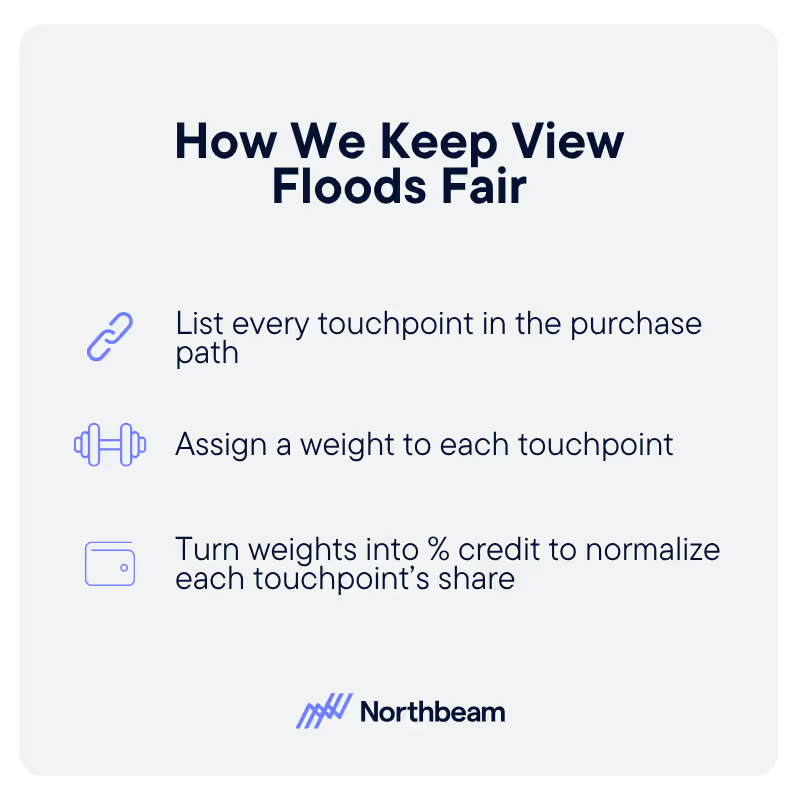
C+DV’s credit rules are deliberately conservative: rapid view‑plus‑click pairs within 30 seconds are de‑duplicated (the click wins), clicks retain even weighting, and views are pooled by platform and down‑weighted as the number of views from the same platform rises—preventing “view flooding” from stealing outsized credit. Position in the funnel doesn’t bias the view; it’s the platform‑specific pool size that matters.
What Gives Up Credit, and How to Plan Around It
As top‑of‑funnel gains credit, something else gives. You’ll often see “unattributed” shrink as view‑driven touchpoints fill clickless gaps. You’ll also see last‑click “credit catchers” (most commonly branded search and shopping) cede some conversions they previously absorbed in a Clicks‑Only world. That’s expected and healthy: the model is reallocating to the touchpoints that actually created demand across publishers.
Budget implication: protect and fund prospecting and reach/traffic programs that strengthen under C+DV; trim the bottom‑heavy skew that depended on last‑click over‑attribution.
How to Find Your Objective‑level Winners In Minutes
Here’s a quick workflow you can run every week to identify which campaigns to protect or scale.
Start broad, then narrow
Open the Model Comparison view and flip from Clicks‑Only to C+DV to see directional changes by source. Then, pivot by objective to pinpoint where lift concentrates (prospecting, reach/traffic, retention). This tells you what deserves protection before you dive into line items.
See this clip from the webinar, where I examine the model comparison:
Compare intra‑channel at the campaign level
Within each platform, compare each campaign under Clicks‑Only vs C+DV. Highlight any lines that are weak on clicks but meet/exceed goal under C+DV—especially where LTV/longer‑window performance climbs too. Those are “don’t cut—fund” candidates.
Examining how you can compare different models across channels:
Respect conversion lag on view‑heavy channels
On TikTok in particular, one‑day performance rarely tells the story; it’s common to see large jumps from 1‑day to 14/30‑day under C+DV as view influence materializes. Make 7/14/30‑day comparisons before deciding to scale, hold, or pause.
Triage for Incrementality
When judging prospecting/reach lift, emphasize first‑time customer results; you’ll get a truer read on which upper‑funnel efforts are adding net‑new value.
Concrete Examples (to Anchor the Objective Patterns)
- Reach/traffic and prospecting on Pinterest: Omnilux saw a 659% ROAS lift, 728% more transactions, and 671% more revenue on Pinterest when deterministic views were credited versus Clicks‑Only—exactly what you’d expect when awareness objectives get their due. (read the Omnilux case study here)
- Prospecting at scale on Meta: Across TubeScience brands, enabling C+DV surfaced view‑driven contribution that clicks‑only missed, with ROAS and revenue rising—e.g., Kitsch +18–25% ROAS lift and +21% revenue lift; Blissy’s blended Meta ROAS improved from 0.82 to 0.92, adding roughly $80K in attributable revenue over the analysis window. These gains align with high‑impression prospecting mixes.
Understanding how C+DV influences credit in across platforms:
Guardrails (So Teams Don’t Misread Objective‑level Lift)
- Don’t compare to Clicks + Modeled Views (CMV); it’s probabilistic and includes different credit logic. Use Clicks‑Only as your baseline when assessing objective‑level lift under C+DV.
- Expect a “bake‑in” period as C+DV accrues. For objective‑level decisions (especially on Meta/TikTok), rely more on 7/14/30‑day windows and, for early weeks, assess intra‑channel decisions rather than cross‑channel budget shifts.
- When evaluating retention lift, segment by first‑time vs returning to avoid over‑reading exposures to existing customers.
Protect Discovery, Scale What Compounds
Prospecting and reach/traffic campaigns are the primary beneficiaries of C+DV because the model finally recognizes verified, cross‑publisher view influence alongside clicks.
Treat the objective‑level lift you see as a map for budget: protect the discovery lines that get stronger under C+DV (and over longer windows), rebalance away from last‑click catchers, and use first‑time customer performance as your north star for incrementality.
That’s how you fund demand creation—not just demand capture—and build a healthier, compounding mix.
To watch the full webinar, click here. Additionally, you can download our guide that explains all you need to know about Clicks + Deterministic Views, written by my colleague, CJ Hunter, and me. Download it for free here.






























































.avif)

























%25201.avif)



.avif)














.svg)
