




Gamification has moved far beyond loyalty apps and mobile games.
Today, paid media teams are deliberately placing game mechanics in ads to capture attention, boost engagement, and generate richer data.
Instead of asking users to watch an ad, gamified formats invite them to participate in it, and every tap, swipe, or completion event becomes a measurable signal.
In this article, we break down what paid advertising gamification is and how it strengthens attribution by creating more behavioral touchpoints.
You’ll learn which game mechanics matter most, how to map them to attribution metrics, and how to design a gamified campaign that is both fun for users and cleanly trackable for analysts.
We’ll also explore key trade-offs such as tracking complexity, novelty fade, spill-over effects, and the difference between interaction and true incrementality. Finally, we wrap with actionable steps your paid media and attribution teams can use to launch a pilot, measure lift, and scale gamification responsibly.
If you’re looking for a clearer way to understand which ad interactions drive real value, gamified formats offer a promising path.
Why Gamification Works in Paid Ads & Attribution
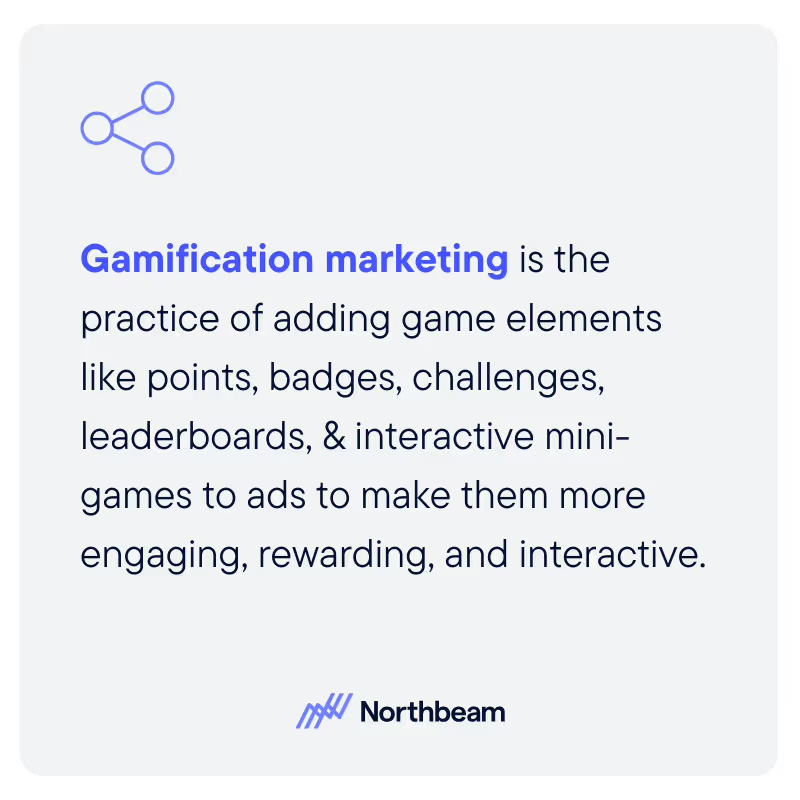
Ad engagement gamification in advertising means adding game elements like points, badges, challenges, or leaderboards directly into an ad to make it more engaging, rewarding, and interactive.
Instead of watching or scrolling past an ad, users get something to do. That small shift turns a passive impression into an active, measurable interaction.
These mechanics work because they naturally increase ad engagement. A playable ad or short interactive challenge keeps users on the creative longer, which improves dwell time, boosts click-through rates, and often leads to higher completion rates.
Some studies, such as the Oppizi benchmark, show engagement lifts of up to roughly 48% for gamified formats.
When users stay longer and do more inside the ad, platforms receive stronger behavioral signals that help the system optimize delivery.
Gamification also enriches event data. Every tap, swipe, choice, or level completion becomes a micro-interaction you can track.
Instead of attributing value to a single click, paid media teams gain a full sequence of user actions inside the ad.
These additional touchpoints clarify how users move from exposure to exploration to conversion, which improves the accuracy of multi-touch attribution models.
In short, gamified ads don’t just make creatives more fun. They generate more data, better signals, and clearer behavioral pathways.
This gives attribution systems more to work with, helping marketers understand which interactions actually drive value and where to invest next.
Core Game Mechanics for Ad Campaigns & How They Map to Attribution Metrics
Gamified ads use familiar game mechanics to turn standard creatives into interactive experiences.
Each mechanic creates its own behavioral signals, which can be tracked as micro-conversions and linked directly to downstream outcomes. The more intentional the mechanic, the stronger the attribution clarity.
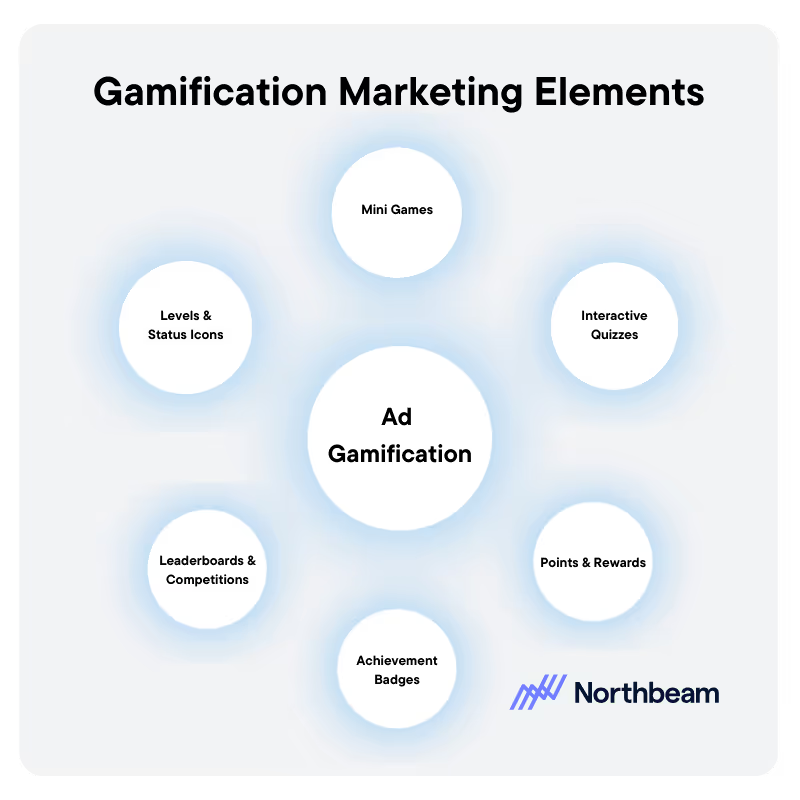
Here’s how to use gamification in paid advertising campaigns:
Playable Ads, Interactive Quizzes, and Mini Games
Playable formats give users something to do rather than something to watch. When someone completes a quiz or finishes a 30-second mini-game, they generate high-quality events such as completed game, earned badge, or claimed reward.
These signals usually correlate with stronger intent, which can make your attribution model more confident when assigning value to later clicks or conversions. They also boost KPIs like interaction count, completion rate, and time spent in the ad.
Points and Rewards Systems
Points create a lightweight incentive loop. Users earn points for behaviors like viewing the ad, completing an action, or clicking through.
Because each point-earning action is trackable, these become micro-conversions that map neatly into multi-touch attribution models.
Reward mechanics can also highlight which steps of the funnel are most motivating, improving attribution across metrics like completion depth, click-through rate, and eventual purchase rate.
Badges, Levels, and Status Icons
These mechanics recognize milestones, such as a user’s first interaction, first purchase, or fifth referral.
Badges and levels produce identifiable behavioral segments that matter for attribution. For example, “badge earners” may show a meaningfully higher likelihood to convert or return later.
Tracking these milestones allows paid media teams to understand repeat value and tie long-term outcomes back to earlier gamified interactions.
Leaderboards and Social Competition
Leaderboards encourage users to share, invite friends, or replay the ad to improve their score. This introduces referral and social-spillover touchpoints that your attribution stack must capture.
When tracked well, these mechanics reveal incremental lift from virality, highlight paid versus organic spill-over, and expose cross-channel influence that standard ads would miss.
Why These Mechanics Strengthen Attribution
Each mechanic generates additional, high-signal behavioral data. Instead of a single click, your attribution model receives a chain of interactions: time in ad, completion status, share events, referral visits, and repeat plays.
These signals reduce noise, improve precision, and help you understand not just who converted, but why.
In many cases, this leads to clearer attribution paths and more confident investment decisions compared to non-gamified formats.
Designing a Gamified Paid Media Campaign With Attribution in Mind
A successful gamified campaign starts with clarity. Before building the interactive experience, define both your paid media objective and the attribution question you want to answer.
1. Set Your Goals
- Identify the primary outcome you want to drive, such as conversions or qualified traffic.
- Specify how you will measure success, for example incremental lift compared to a non-gamified baseline.
2. Choose Mechanics That Fit the Channel
- Display / RTB: short playable ads or tap-based mini-games.
- Social: quizzes, challenges, or reward-based formats.
- Video: choose-your-path or interactive narrative elements.
- Select the mechanic that matches user behavior and attention patterns for that platform.
3. Instrument Your Tracking
- Add event triggers inside the ad, such as badge earned, level complete, or reward unlocked.
- Ensure all events flow into your attribution system with clean identifiers.
- Set up ad-touch tracking so micro-events connect to downstream funnel activity.
4. Pilot and Capture Micro-Metrics
- Monitor interaction rate, completion rate, share rate, replay rate, and in-ad drop-off.
- Use these metrics to understand how users progress through the experience.
5. Feed Data Into Your Attribution Model
- Map micro-events to later actions, such as micro-interaction → click → conversion.
- Compare performance to your baseline to measure true contribution.
6. Optimize for Both Engagement and Accuracy
- Test reward types, difficulty levels, and incentives.
- Confirm that attribution logic handles additional touchpoints, including referrals or repeat plays, without double-counting.
This structure keeps the campaign creative while ensuring every interaction is measurable and attribution-ready.
Attribution-Specific Considerations & Paid Media Trade-offs
Gamification can strengthen ad performance and provide richer data, but it also introduces new complexities that paid media and attribution teams need to manage carefully.
Tracking Complexity
- Gamified ads trigger many micro-events, such as level completions or reward claims.
- These events increase data volume and must integrate cleanly with your attribution system.
- Without proper tagging and ingestion, valuable signals can be lost or misattributed.
Interaction Does Not Equal Incrementality
- High engagement inside the ad doesn’t guarantee higher conversion lift.
- To understand true impact, use controlled experiments like A/B tests or hold-out groups.
- This separates meaningful behavioral change from surface-level interaction.
Creative Costs vs. Return
- Playable and interactive formats can be more expensive to produce or run.
- Measure incremental lift and ROAS rather than relying on vanity metrics like time-in-ad.
- Focus on the net value added, not just the engagement spike.
Spill-Over and Attribution Noise
- Gamification can generate shares, referrals, and organic traffic spikes.
- Attribution models must distinguish paid influence from organic behavior to avoid mis-crediting.
- This is essential when virality or social competition elements are involved.
Attribution Windows and Event Linking
- Define attribution windows that can accommodate both micro-events and delayed conversions.
- Ensure each event ties cleanly to downstream actions in your model.
Novelty Fade
- Gamification effects often diminish as users become familiar with the mechanic.
- Continuous iteration and long-term measurement help maintain performance and accuracy.
Managing these factors ensures that gamification strengthens your attribution strategy rather than complicating it.
Case Study Example: DTC Brand
Imagine a DTC wellness brand that wants to test game mechanics in digital advertising to boost ROAS.
Instead of a static video, the team launches a 30-second playable experience where users swipe to “catch” product ingredients and earn a completion badge. Finishing the mini-game unlocks a small coupon code, which can be redeemed at checkout.
Every part of this journey fires a micro-event: game start, game completion, badge earned, coupon revealed, and click-through. These events flow into the brand’s attribution system and are linked to purchases made within a seven-day window.
When compared to a non-gamified control ad, the difference is clear. The interaction rate doubles, but the more important lift is in downstream performance. After controlling for creative cost and impression volume, incremental ROAS rises by 15 percent.
The attribution model connects the sequence (completion of the mini-game leading to a click, and then to a purchase) with far more confidence than it could with a single CTR metric.
The brand also segments users based on in-ad behavior. Badge earners show a higher likelihood of redeeming offers later, so the team builds a remarketing audience specifically around this group. That segment ultimately becomes one of the brand’s highest-LTV cohorts.
Finally, the attribution team uncovers an unexpected spill-over effect. Some users complete the mini-game, skip the click-through, and later navigate directly to the site to buy.
Because each badge earned is tied to a unique identifier, the attribution model correctly captures those conversions as influenced by the gamified ad rather than treating them as organic traffic.
Actionable Next Steps for Paid Media & Attribution Teams
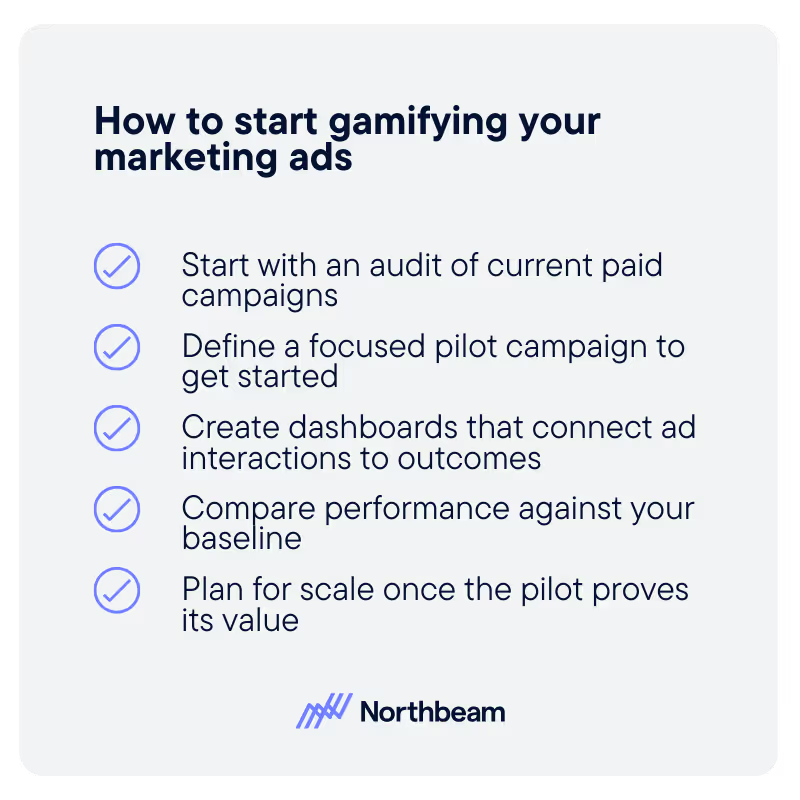
To turn gamified ads into measurable results, teams can follow a structured rollout that balances creative experimentation with attribution discipline:
- Start with an audit of your current paid campaigns. Identify ads with low interaction, high bounce, or unclear attribution paths. Prioritize formats that would benefit most from richer behavioral data.
- Define a focused pilot campaign. Choose one game mechanic and build the interactive experience around it. Specify the micro-events you want to track and confirm your attribution system can ingest them. Establish a clean control or hold-out group to measure incremental lift.
- Create dashboards that connect in-ad interactions to downstream outcomes. Track how events like level complete or coupon unlocked lead to clicks, visits, and conversions. Ensure the data flows smoothly across your multi-touch attribution model.
- Compare performance against your baseline. Evaluate engagement rate, completion rate, conversion rate, incremental ROAS, and attribution share. Look not just at volume but at the quality and predictability of behavioral signals.
- Plan for scale once the pilot proves its value. Refine game mechanics, expand to new channels, and adjust attribution logic to handle additional touchpoints such as shares, referrals, or repeat plays. Continue validating incrementality to ensure you are measuring true impact rather than inflated engagement.
By following these steps, teams can turn gamification into a repeatable growth and measurement lever rather than a one-off creative experiment.
Turn Engagement Into Measurable Growth
Gamification gives paid media teams a powerful way to boost engagement while generating clearer, higher-quality data for attribution.
When every interaction becomes a measurable signal, it becomes easier to understand what truly drives conversions and where to invest next.
If you’re exploring gamified ads for the first time, start small. Run a focused pilot, measure incremental lift, and refine from there.
With the right structure in place, gamification can become a scalable part of your paid strategy.








































.avif)















%25201.avif)


.avif)












.svg)
