





Many SEO programs generate traffic, but far fewer can explain why that traffic matters to the business. Too often, SEO objectives are vague, metric-driven, or disconnected from the decisions teams actually need to make.
This article breaks down how to define SEO objectives in business terms, map the right metrics to real goals, avoid common planning traps, and implement a measurement-ready SEO framework.
SEO can be a tool for prioritization and decision-making, not just another line in a performance report.
What an SEO Objective Is (and What It Is Not)
An SEO objective is a business-aligned outcome that SEO is responsible for influencing. It answers the question: what should organic search meaningfully change for the business?
A strong SEO objective is specific, measurable, and connected to a real decision or priority, not just a performance report.
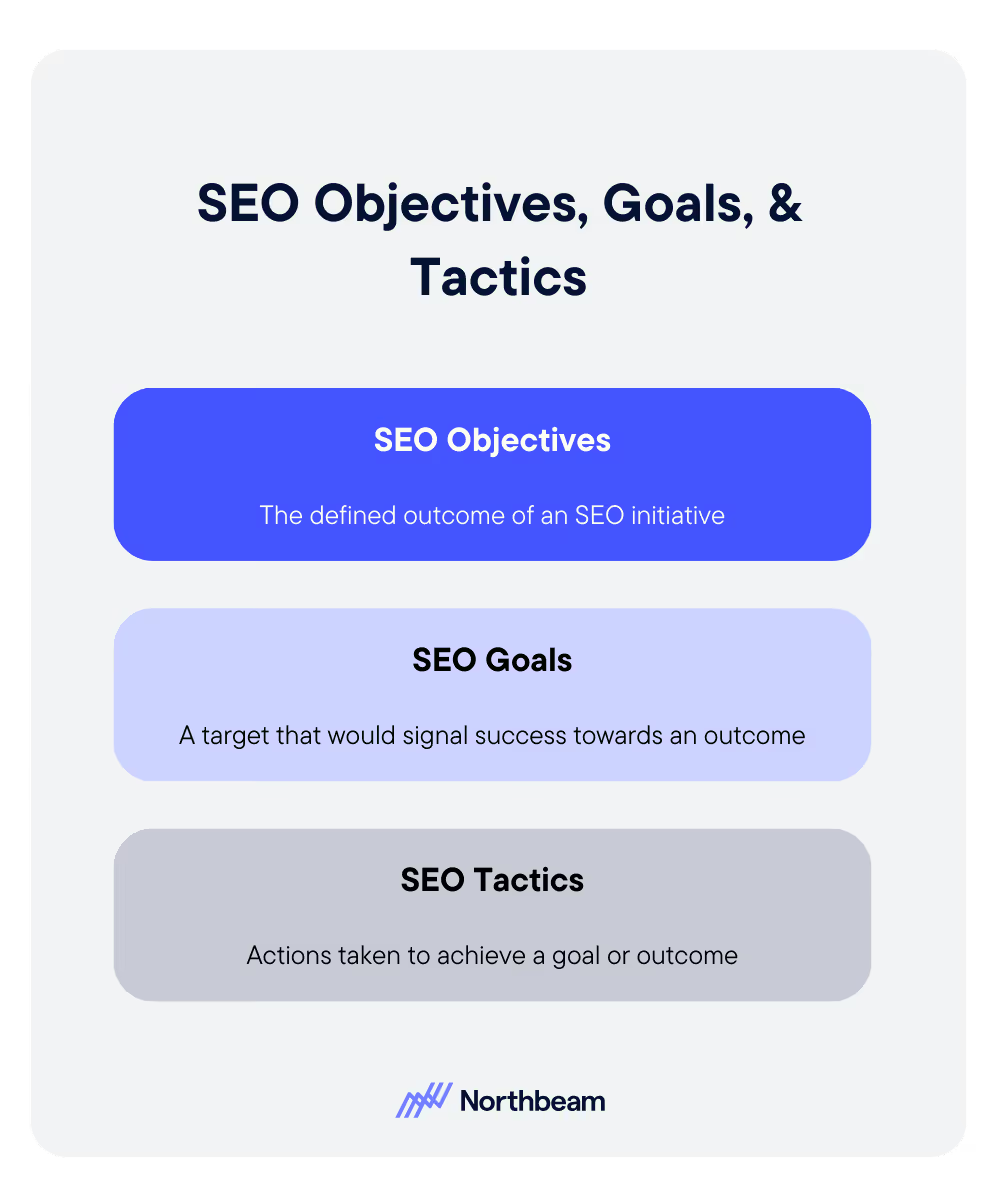
This is where many teams get tripped up. SEO objectives, SEO goals, and SEO tactics should not be used interchangeably.
- An SEO objective defines the outcome.
- An SEO goal sets a target that signals success
- SEO tactics are the actions you take to get there.
For example, “improve qualified demo starts from non-branded search” is an objective. “Publish comparison pages” is a tactic.
That’s why “increase traffic” is not an SEO objective. Traffic is a byproduct, not a business outcome. More sessions only matter if they lead to revenue, retention, efficiency, or strategic visibility.
It’s also important to distinguish leading vs lagging SEO objectives. Leading objectives focus on early indicators like visibility in priority queries. Lagging objectives measure downstream impact like conversions or pipeline contribution.
Why SEO Objectives Often Fail to Drive Impact
Even well-funded SEO programs can stall if objectives aren’t designed to support real business decisions. Most failures trace back to a small set of structural issues, not execution quality.
Over-Reliance on Vanity SEO Metrics
Rankings, impressions, and raw traffic are easy to report, but they rarely reflect business value. When success is defined by surface-level SEO metrics, teams optimize for visibility rather than outcomes.
Misalignment with Product, Sales, or Lifecycle Goals
SEO objectives often exist in a vacuum. If organic priorities aren’t tied to how a product is sold, adopted, or retained, SEO efforts struggle to influence revenue or customer growth.
Lack of Ownership and Decision Authority
When no one owns the objective end to end, SEO becomes a reporting function instead of a strategic lever. Teams may identify issues but lack authority to change content, architecture, or roadmap priorities.
Time Lag Between SEO Work and Results
SEO operates on longer timelines than paid channels. Without clear expectations, leaders lose confidence before impact materializes, leading to shifting goals and abandoned initiatives.
The Result: Reactive Optimization and Wasted Effort
Together, these issues push teams into chasing short-term signals instead of building durable, compounding search performance.
Core Business Objectives SEO Can Support
When SEO objectives are aligned to business priorities, organic search becomes a durable growth engine rather than a traffic channel. The key is anchoring SEO to outcomes the business already measures and values.
Demand Generation and Pipeline Creation
SEO can drive qualified demand by capturing high-intent searches across problem, solution, and comparison queries. When tied to pipeline metrics, organic search supports predictable lead flow and reduces reliance on paid acquisition.
Revenue Efficiency and Cost Reduction
By replacing or supplementing paid traffic, SEO improves customer acquisition cost over time. Strong organic performance also reduces pressure on sales teams by pre-educating prospects before prospects enter the funnel.
Brand Visibility and Category Authority
SEO shapes how a brand appears across an entire category, not just branded terms. Consistent visibility in non-branded searches builds authority, trust, and long-term mindshare earlier in the buying journey.
Customer Education and Self-Serve Support
Search-optimized content helps users answer questions independently, reducing support volume and accelerating onboarding. This is especially valuable for complex products where education directly impacts activation and satisfaction.
Retention and Expansion Through Content
SEO supports the full customer lifecycle. Content addressing advanced use cases, integrations, and best practices reinforces retention and creates expansion opportunities.
Choose the Right Business Anchor for SEO
The strongest SEO objectives start with a single primary business objective. Teams should anchor SEO to the outcome that reflects current priorities, then align metrics, tactics, and resources accordingly.
Choosing SEO Metrics That Actually Reflect Progress
Instead of tracking everything, effective teams select a small set of metrics that signal progress toward real business outcomes.
Visibility Metrics
Visibility metrics show whether your content is appearing where it matters.
Key metrics include:
- Impressions: Indicate presence in search results for priority queries.
- Share of Voice: Measures visibility relative to competitors across a defined keyword set.
Best used as: leading indicators for awareness and category positioning objectives.
Engagement Metrics
Engagement metrics help validate whether visibility is translating into meaningful user interaction.
Key metrics include:
- Click-Through Rate (CTR): Signals relevance and effectiveness of titles and descriptions.
- Dwell Signals: Time on page, scroll depth, or engagement proxies that suggest content usefulness.
Best for: diagnosing content quality and intent alignment.
Outcome Metrics
Outcome metrics connect SEO directly to business impact.
Key metrics include:
- Conversions: Leads, signups, purchases, or other primary actions driven by organic traffic.
- Assisted Value: SEO’s contribution to downstream conversions across the buyer journey.
Best for: revenue, pipeline, and retention-focused objectives.
Diagnostic Metrics vs Success Metrics
Not all metrics are equal:
- Success metrics define whether an objective was achieved.
- Diagnostic metrics explain why performance changed and where to intervene.
How to Avoid Metric Overload
Limit each SEO objective to one or two success metrics, supported by a small set of diagnostics. Metrics should drive decisions, not dashboards.
Common SEO Objective Mistakes and How to Fix Them
Even well-intentioned SEO objectives can fail if they aren’t grounded in operational reality. These common mistakes often undermine impact and credibility.
Setting Objectives Without Baselines
Without a baseline, teams can’t tell whether progress is meaningful or just noise. Objectives should start with a clear understanding of current performance so improvement can be measured honestly.
Changing Objectives Too Frequently
SEO requires time to compound. Constantly shifting objectives resets momentum and erodes stakeholder confidence. Objectives should remain stable long enough to evaluate impact, even if tactics evolve underneath them.
Optimizing Metrics No One Acts On
If a metric doesn’t trigger a decision, it isn’t useful. Objectives tied to passive metrics lead to reporting cycles instead of action. Every tracked metric should have a clear owner and response plan.
Ignoring Constraints Like Resources and Tech Debt
Objectives that ignore engineering capacity, content bandwidth, or technical limitations create frustration and missed expectations. Feasible objectives acknowledge constraints and prioritize accordingly.
Practical Guardrails And Corrections
Effective teams document assumptions, limit objectives per quarter, and revisit baselines before setting new targets. Guardrails keep SEO focused, credible, and aligned with what the organization can actually execute.
SEO Objective Measurement & Governance
Clear objectives only drive impact if they’re supported by disciplined measurement and governance. Without structure, even well-defined SEO objectives drift into reporting exercises.
Core KPIs To Track Alongside SEO Objectives
Effective measurement focuses on a small set of KPIs that reflect business contribution. These often include organic contribution to key outcomes, conversion rate by query or page type, time-to-impact for SEO initiatives, and content decay or refresh velocity.
Together, these metrics show not just performance, but durability and momentum.
Diagnostic Checks
Diagnostic checks help teams understand why performance changes. Objective-to-metric consistency ensures success is measured as intended.
Monitoring sensitivity to algorithm or SERP changes protects against misattribution, while cross-channel cannibalization analysis clarifies how SEO interacts with paid, email, and other channels.
Governance Considerations
Strong governance keeps SEO accountable and defensible.
Objectives should have clear ownership, typically shared between SEO and marketing leadership. A quarterly review cadence allows teams to assess progress without overreacting to short-term noise.
Documenting assumptions, constraints, and limitations ensures transparency and better cross-functional alignment.
Best Software Tools & Workflows to Measure SEO Objectives
Measuring SEO objectives effectively requires a connected workflow rather than a single tool. The goal is to move cleanly from inputs to insight, planning, and execution.
Inputs
- Search performance data from platforms like Google Search Console
- Site and behavior analytics from tools such as Google Analytics or Adobe Analytics
- Conversion, revenue, or lifecycle data from CRM or customer data platforms
Analysis
- Query grouping to understand intent and topic performance
- Page-level analysis to identify high- and low-impact content
- Trend analysis to monitor progress against objectives over time
- SEO platforms, analytics tools, and BI tools used together to surface insight
Planning
- Roadmaps tied directly to SEO objectives and expected effort
- Prioritization frameworks based on impact, resources, and dependencies
- Project management and planning tools to align teams and timelines
Execution
- Content creation and optimization through content management systems
- Technical SEO improvements using auditing and monitoring tools
- Authority-building initiatives supported by outreach or digital PR tools
Workflow for SEO Objectives

Turning SEO objectives into sustained business impact requires a repeatable workflow with clear ownership at every stage.
This phased approach helps teams move from SEO strategy to execution without losing alignment or momentum.
Phase 1: Define Business-Aligned SEO Objectives
SEO and marketing leadership should work together to define a small set of objectives tied directly to business priorities such as pipeline growth, revenue efficiency, or customer education.
The output should be a documented set of SEO objectives with clear success criteria, assumptions, and constraints. These objectives guide prioritization and serve as the reference point for all downstream work.
Phase 2: Baseline And Metric Alignment
Once objectives are set, analytics or SEO operations teams establish baselines and align metrics. This includes documenting current performance, selecting success and diagnostic metrics, and building dashboards that track progress over time.
The goal is to ensure the team can distinguish real improvement from short-term noise before execution begins.
Phase 3: Roadmap And Execution
With objectives and metrics in place, the SEO team builds a roadmap of initiatives tied explicitly to each objective. Content, technical, and authority efforts are prioritized based on expected impact and effort.
Execution focuses on delivering these initiatives consistently while monitoring early signals and constraints.
Phase 4: Review And Iterate
SEO objectives should be reviewed on a regular cadence with cross-functional stakeholders. Teams assess performance, revisit assumptions, and refine objectives as business priorities evolve.
This phase ensures SEO remains aligned, defensible, and continuously improving rather than static.
From Metrics to Meaningful Impact
Effective SEO starts with clarity about what your business actually needs. When objectives are anchored in real outcomes rather than surface metrics, SEO becomes a tool for prioritization and accountability, not just reporting.
SEO metrics should support learning and decision-making, not serve as the goal themselves. With clear ownership, disciplined measurement, and strong governance, SEO objectives can deliver durable, defensible impact that compounds over time.









































































.avif)































%25201.avif)



.avif)















.svg)
