




AOV, or Average Order Value, sits at the intersection of marketing efficiency, merchandising strategy, and customer experience.
In this guide, we break down AOV’s meaning, how to calculate AOV, why AOV matters, and the most common misconceptions teams make when trying to improve AOV.
Most importantly, we show how to increase AOV sustainably by treating it as a system-level metric, not a one-off upsell tactic.
What Does AOV Stand For and What Does It Actually Measure
AOV stands for Average Order Value. It measures the average dollar amount a customer spends each time they place an order on your site.
At its simplest, AOV answers one question: when someone buys, how much do they spend per transaction?
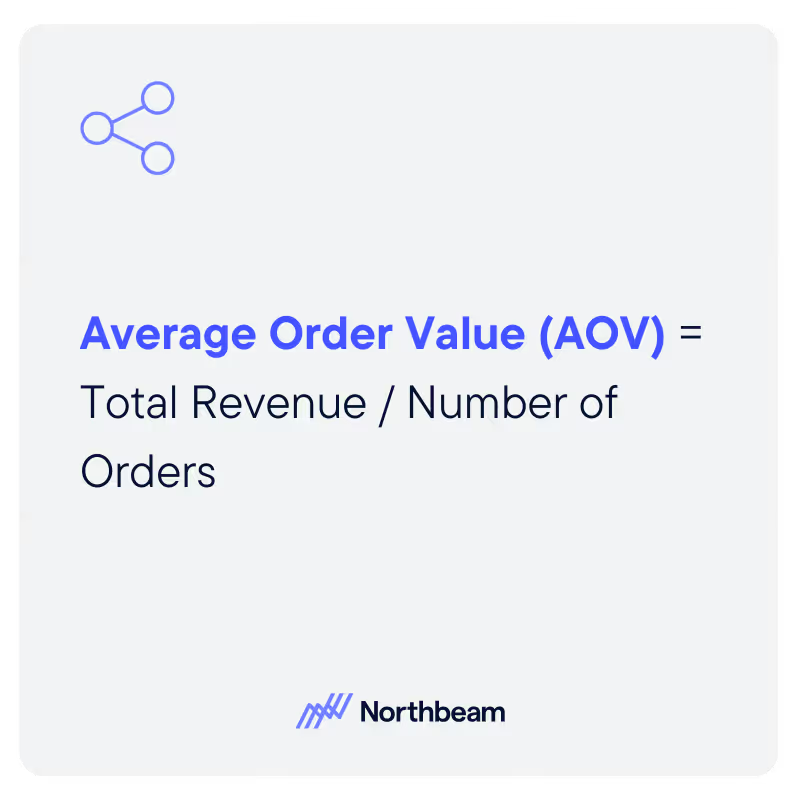
The basic AOV formula is straightforward: AOV = Total Revenue ÷ Number of Orders
Revenue typically includes all completed purchases within a defined period. Orders count each transaction, regardless of how many items are included.
Refunds, discounts, and taxes should be handled consistently so the metric reflects true commercial performance rather than accounting noise.
What AOV tells you is how effectively your pricing, merchandising, and cart experience encourage customers to add value to each purchase.
What it does not tell you is why customers bought, how many visitors converted, or whether those customers will return. A high AOV can coexist with low conversion, weak retention, or rising returns.
This is why AOV must be interpreted alongside related metrics. Without guardrails, AOV gains can mask deeper issues or create short-term wins at the expense of long-term growth.
Why AOV Matters for E-Commerce Growth and Profitability
AOV matters because it directly increases revenue without requiring more traffic. If conversion rate and traffic stay constant, even a modest lift in average order value translates into immediate revenue growth.
This makes average order value one of the most capital-efficient levers available to e-commerce teams, especially when paid acquisition costs are rising.
That efficiency becomes clearer when AOV is viewed alongside customer acquisition cost and margin. Higher AOV means each order absorbs fixed acquisition costs more effectively, improving contribution margin per transaction.
When margins are tight, increasing AOV can be the difference between scaling profitably and scaling losses, particularly in paid channels where CAC is difficult to control.
Small improvements compound over time. A 5% increase in AOV does not just raise short-term revenue: it can improve payback periods, allow more aggressive reinvestment in growth, and create room for better service or faster shipping.
Over thousands of orders, these gains add up quickly.
There are also situations where AOV matters more than conversion rate. For brands with strong intent traffic or loyal repeat customers, increasing order value can outperform marginal gains in conversion.
How to Calculate and Segment AOV
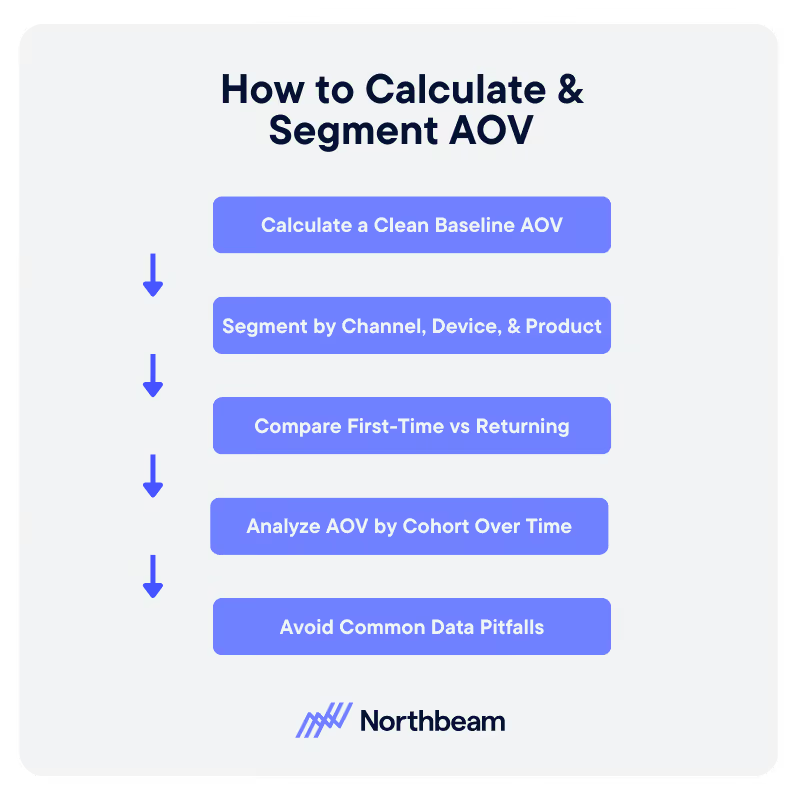
Using AOV correctly requires consistency, segmentation, and an understanding of how different customer behaviors affect the average.
1. Calculate a Clean Baseline AOV
Start with a clearly defined time period and a single source of truth for orders and revenue. Divide total completed purchase revenue by the number of orders in that same window.
Exclude canceled orders and handle refunds consistently, either netting them out of revenue or tracking them separately. The goal is a stable baseline you can trust before making changes.
2. Segment AOV by Channel, Device, and Product
Overall AOV hides important variation. Break it down by acquisition channel, device type, customer segment, and product category.
Paid social, email, and organic search often produce meaningfully different order values, as do mobile versus desktop shoppers. These differences help identify where AOV optimization will be most effective.
3. Compare First-Time vs Returning Customers
First-time customers usually have lower AOV due to trust barriers and limited familiarity. Returning customers often buy more per order and respond better to bundles or cross-sells.
Separating these groups prevents misleading conclusions and supports more targeted AOV strategies for e-commerce.
4. Analyze AOV by Cohort Over Time
Cohort analysis shows how AOV evolves for customers acquired in the same period or campaign. This reveals whether AOV gains are sustainable or driven by short-term promotions that fade quickly.
5. Avoid Common Data Pitfalls
Watch for distorted averages caused by heavy discounts, one-off bulk orders, or seasonality. Always interpret AOV alongside conversion, retention, and returns to avoid optimizing the wrong outcome.
Core Strategies to Increase AOV
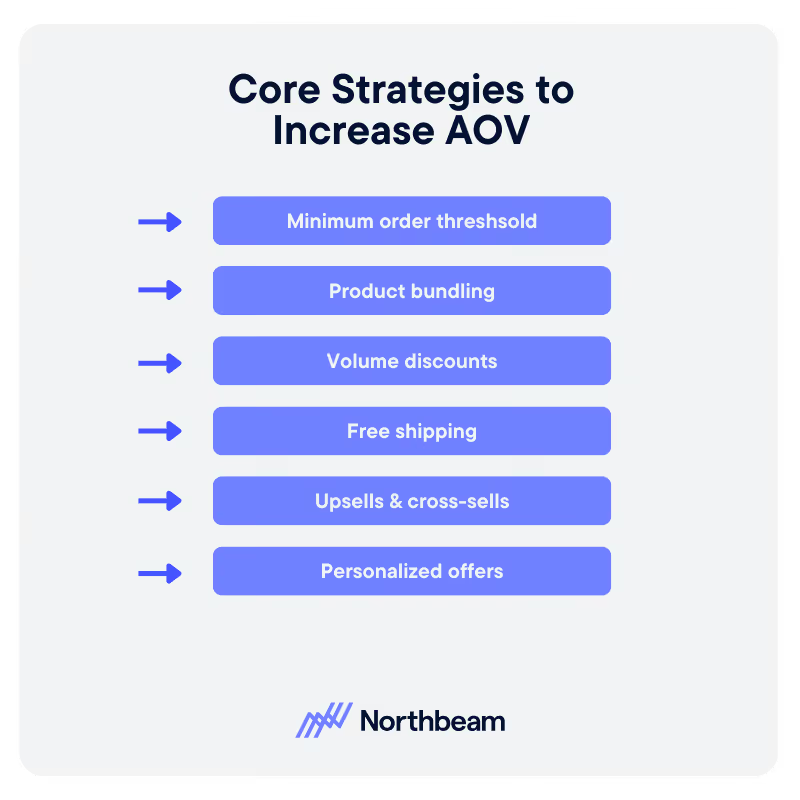
The most effective AOV strategies increase order value by making the purchase more useful or more complete for the customer:
Product Bundling and Kits
Bundles increase AOV by grouping complementary products into a single, higher-value offer. The strongest bundles solve a specific use case or workflow rather than simply discounting multiple items.
Clear value framing matters. Customers should immediately understand why buying the bundle is better than purchasing items individually.
Upsells and Cross-Sells at the Right Moments
Upsells work best when they are contextually relevant and timed carefully. In-cart recommendations, post-add confirmations, and checkout-side suggestions tend to perform better than aggressive pop-ups. The goal is to extend the customer’s intent, not interrupt it.
Minimum Order Thresholds and Free Shipping
Free shipping thresholds are one of the most reliable ways to lift AOV. When set just above current average order value, they nudge customers to add one more item without feeling punitive. Thresholds should be tested and adjusted based on margin and fulfillment costs.
Volume Discounts and Tiered Pricing
Tiered pricing rewards customers for buying more while preserving margin at higher quantities. This approach works well for consumables and replenishable products, where customers already anticipate repeat use.
Personalization Based on Cart or History
Personalized recommendations tied to cart contents or past purchases feel more helpful than generic suggestions. Even simple rules-based personalization can outperform static cross-sells.
Guardrails to Protect Experience
Too many offers, discounts, or choices can overwhelm shoppers and suppress conversion. Track conversion rate, returns, and repeat purchase behavior alongside AOV to ensure gains are sustainable rather than extractive.
Advanced AOV Levers: Merchandising, UX, and Pricing Signals
Once foundational AOV tactics are in place, more advanced gains often come from subtle changes in merchandising, user experience, and pricing signals that shape how customers perceive value.
Anchoring and Price Framing
Anchoring influences how customers evaluate price by providing a reference point.
Showing a higher-priced option first, highlighting “most popular” tiers, or displaying original prices alongside bundled offers can make mid-range carts feel more reasonable without relying on deep discounts.
Strategic Placement of Higher-Value Items
Placement matters as much as pricing. Featuring higher-value products earlier in category pages, within collections, or as defaults in bundles increases their visibility and likelihood of inclusion.
This works best when placement aligns with customer intent rather than feeling promotional.
Subscriptions and Replenishment Models
Subscriptions can meaningfully increase AOV by converting single purchases into predictable, multi-item or multi-period commitments.
Replenishment prompts tied to usage patterns or reorder timing reduce friction and raise average order value while supporting retention.
Social Proof and Trust Signals
Larger carts increase perceived risk. Reviews, ratings, guarantees, and delivery transparency reduce hesitation and give customers confidence to spend more in a single transaction. Trust signals are especially important near cart and checkout.
Testing Cadence and Prioritization
Advanced AOV optimization requires disciplined experimentation. Prioritize tests based on potential impact and risk, and evaluate results alongside conversion, retention, and return rates to ensure gains reflect real value creation rather than short-term distortion.
When Not to Optimize AOV and What to Watch Instead
AOV optimization can backfire when it is pursued without regard for conversion, retention, or customer trust.
Aggressive upsells, forced bundles, or constant discounting may raise order value in the short term while suppressing conversion rates, increasing returns, or reducing repeat purchases.
These trade-offs often show up quietly: a rising AOV paired with declining customer satisfaction, longer payback periods, or higher refund rates.
Warning signs include first-time customers failing to return, post-promotion AOV collapsing, or customer support volume increasing around pricing and fulfillment.
In these cases, optimizing for revenue per visitor, repeat purchase rate, or customer lifetime value may be more appropriate than pushing order size.
The goal is not to maximize AOV at all costs, but to balance near-term gains with long-term value creation, ensuring higher orders reflect genuine customer benefit rather than friction or pressure.
AOV Measurement & Governance
Tracking AOV in isolation creates blind spots. Sustainable improvements require clear guardrails, supporting metrics, and shared standards across teams.
Core KPIs to Track Alongside AOV
- Conversion rate to ensure higher order values are not suppressing purchases.
- Revenue per visitor to connect AOV gains to traffic quality.
- Repeat purchase rate to confirm higher orders support retention.
- Customer lifetime value to measure long-term impact beyond single transactions.
- Return and refund rate to catch friction or over-selling early.
Diagnostic Checks
- Compare AOV for first-time vs returning customers to spot trust or onboarding issues.
- Monitor AOV changes by channel after promotions to identify distortion from discounts.
- Track cart abandonment trends following AOV initiatives to detect experience regressions.
Governance Considerations
- Set discount controls and approval thresholds to prevent margin erosion.
- Define experimentation standards and success criteria before launching tests.
- Maintain data consistency and a regular reporting cadence so AOV insights remain trustworthy and actionable.
Recommended AOV Tools & Workflow
Improving AOV consistently requires the right data foundation, analysis capabilities, and cross-team coordination.
Data Layer
- Order data with consistent revenue, discount, and refund handling.
- Product data including pricing, bundles, and categories.
- Customer attributes such as acquisition source, device, and purchase history.
Analytics
- AOV calculation with clear definitions and time windows
- Segmentation by channel, customer type, and product mix.
- Trend tracking to monitor durability of AOV changes over time.
Experimentation
- A/B testing for bundles, free shipping thresholds, and pricing structures.
- Controlled rollouts to isolate AOV impact from seasonality or promotions.
Activation
- On-site merchandising and cart-level recommendations.
- Email and lifecycle triggers tied to cart contents or past behavior.
Workflow Handoffs
- Marketing identifies opportunities and traffic context.
- Merchandising and product implement offers and UX changes.
- Analytics validates impact and monitors guardrails.
Treat AOV as a System, Not a Shortcut
Sustainable AOV growth comes from aligning pricing, merchandising, and experience in ways that genuinely serve the customer, not just squeeze out every last drop of value.
The most effective teams treat AOV as a system-level lever, informed by data, protected by guardrails, and tested continuously alongside conversion, retention, and lifetime value.






















































.avif)























%25201.avif)


.avif)












.svg)
