




In a marketing environment defined by fragmented channels, rising competition, and constant market shifts, teams need more than performance metrics. They need marketing intelligence that connects internal data with external signals to guide real decisions.
This guide breaks down what marketing intelligence is and how to use data to build out your marketing intelligence strategy, outsmart competitors, and drive measurable business impact.
Clarifying What Marketing Intelligence Really Means
Marketing intelligence is the process of gathering, standardizing, and analyzing both internal performance data and external market and competitive data to support real marketing decisions.
Not just what to optimize, but where to play, where to pull back, and how to respond when the market shifts.
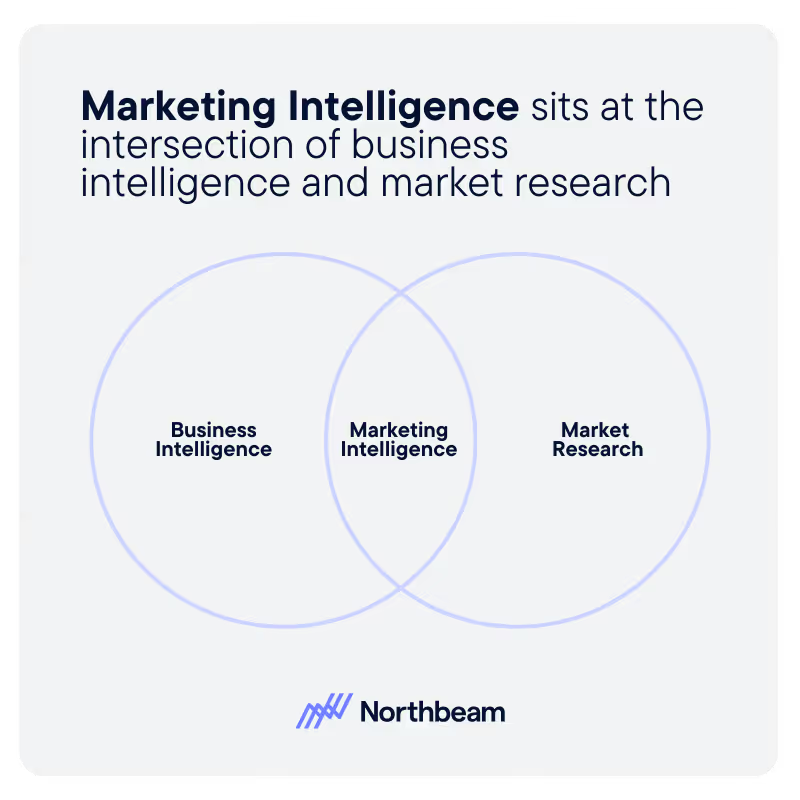
This distinction matters, because marketing intelligence is frequently confused with adjacent disciplines.
- Business intelligence, for example, tends to look inward. It focuses on historical performance, financials, and operational metrics.
- Marketing research, on the other hand, is often episodic and qualitative. Think surveys, focus groups, and brand studies run at specific moments in time.
Marketing intelligence sits at the intersection of the two. It connects performance metrics with customer behavior, product signals, and competitor activity.
It answers questions like: Why did this channel suddenly become more expensive? Which segment is quietly being captured by a competitor? Where is the market overserved, and where is it being ignored?
Marketing intelligence gives teams a way to move from isolated metrics to informed decisions, and from reactive optimization to proactive strategy.
The Four Pillars of Marketing Intelligence
A useful way to organize marketing intelligence is around four distinct but connected pillars. Together, they create a more complete view of how your marketing is performing, how your audience is behaving, and how the market around you is evolving.
Performance Intelligence
Performance intelligence is the most familiar pillar. It covers campaign and channel data, including spend, ROAS, conversion rates, and cost efficiency. This data tells you what is working right now and where budgets are being over or underutilized.
Customer Intelligence
Customer intelligence focuses on how real people move through your funnel and lifecycle. This includes behavioral data, engagement patterns, preferences, retention signals, and churn indicators. It helps answer questions about who is responding to your marketing, who is dropping off, and why.
Product and Offering Intelligence
Product and offering intelligence connects marketing to what you actually sell. It looks at product usage, feature adoption, customer feedback, and how your offering is perceived relative to alternatives.
Competitive and Market Intelligence
Competitive and market intelligence brings external context into the picture. It tracks competitor behavior, category trends, pricing shifts, and emerging white space.
This pillar helps teams understand whether performance changes are driven by internal execution or by broader market forces, allowing marketing to respond strategically and use marketing intelligence to beat competitors.
From Data to Strategic Insight: The Workflow
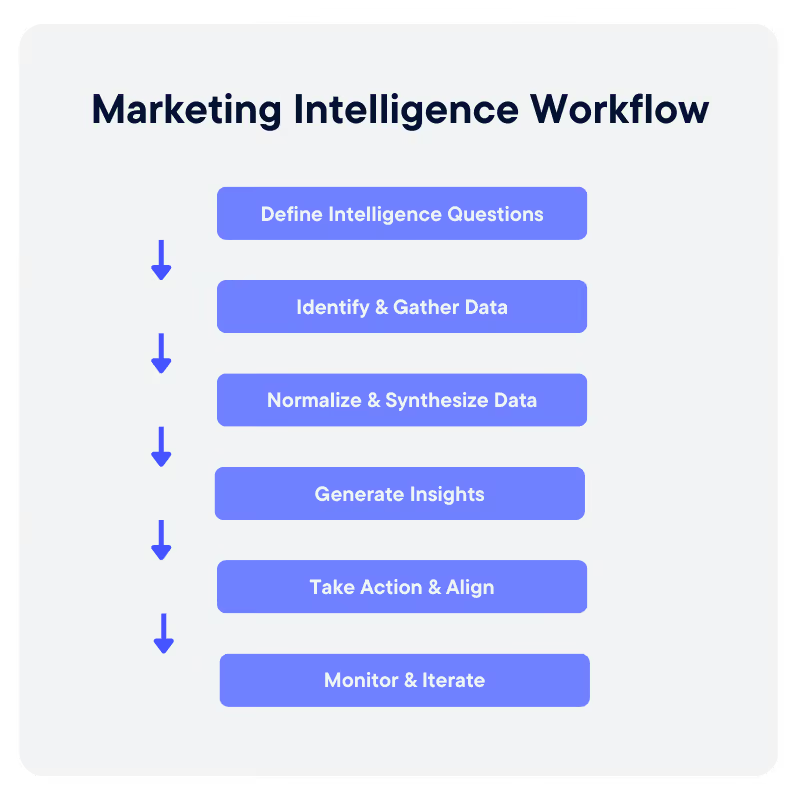
A repeatable marketing intelligence process ensures intelligence moves from raw inputs to real decisions, and back again, as part of an ongoing strategic loop.
1. Define the Intelligence Questions
The workflow starts with the questions, not the data.
Effective marketing intelligence is driven by specific, decision-oriented questions such as which competitor is gaining share in a key channel, or which customer segment is being underserved.
These questions anchor the entire process and prevent teams from chasing metrics that look interesting but do not influence strategy.
2. Identify and Gather Data Sources
Once the questions are defined, teams can identify the data needed to answer them. This typically includes internal sources like analytics and ad platform performance, alongside external inputs such as market research, social listening, and competitor signals.
3. Normalize and Synthesize the Data
Raw data is rarely comparable out of the box. Normalization ensures consistent definitions, timeframes, and metrics across sources, while synthesis brings disparate data into a central view. This step is critical for turning fragmented inputs into a coherent intelligence foundation.
4. Generate Insights
Insight generation is where patterns emerge. This might reveal that a competitor has quietly reduced spend in a channel, or that a segment is saturated with similar messaging. These insights explain the “why” behind performance changes and highlight opportunities or risks.
5. Take Action and Align
Insights only matter if they drive decisions. At this stage, marketing adjusts budgets, creative, targeting, or go-to-market strategy based on what the intelligence reveals. Alignment across teams ensures changes are intentional and measurable.
6. Monitor and Iterate
Finally, teams track the impact of their actions. Results feed back into the intelligence process, refining future questions and enabling continuous adaptation as market conditions evolve.
Translating Intelligence into Actionable Strategy
Marketing intelligence earns its place when it directly informs decisions. The value is not in knowing more, but in acting differently and with greater confidence.
Here are four marketing intelligence use cases for marketers:
Channel Optimization
One of the most immediate applications of marketing intelligence is channel optimization. When intelligence reveals that a competitor is reducing spend or exiting a channel, it creates an opportunity to test increased investment at potentially lower cost.
Instead of reacting to rising or falling performance in isolation, teams can make proactive budget shifts informed by competitive marketing intelligence and measure whether the move delivers incremental gains.
Segment and Product Opportunities
Intelligence also surfaces opportunities that are easy to miss when focusing only on aggregate metrics. By combining customer behavior, performance data, and market signals, teams can identify nuanced segments that are underserved or overlooked.
Marketing can then tailor messaging, creative, and product positioning to those audiences and use attribution to track whether engagement and conversion improve relative to baseline.
Attribution Context
Attribution data rarely tells the full story on its own. Marketing intelligence provides the context needed to interpret changes in performance.
A spike in costs or a drop in conversion may be driven by external factors such as a competitor campaign or a broader market shift. Intelligence helps teams distinguish between internal execution issues and external pressure, allowing them to adjust models, expectations, and strategy accordingly.
Risk Mitigation
Beyond growth, marketing intelligence supports risk management. Early signals around regulatory changes, platform policy shifts, or macroeconomic trends give teams time to adapt positioning, messaging, or channel mix.
By spotting these signals early, marketing can reduce exposure and maintain stability while competitors scramble to react.
Enabling Tools & Team Setup
Tools, roles, and governance determine whether marketing intelligence becomes a repeatable capability or a one-off analysis that never scales.
Technology Stack
Marketing intelligence typically sits on top of a shared data foundation. This often includes a data warehouse or lake to centralize internal and external data, supported by ETL tools to keep data fresh and consistent.
BI and dashboarding tools make insights accessible to marketers and leaders, while real-time alerts can surface sudden shifts in performance or competitive activity.
In some cases, dedicated competitor intelligence platforms add structured external signals, but they should complement, not replace, core data infrastructure.
Team Roles and Governance
Clear ownership is critical. Someone must be responsible for maintaining the intelligence pipeline, often a combination of data engineers, analysts, and marketing stakeholders.
Equally important is governance. Teams need defined review cadences, shared definitions, and clarity on who has the authority to act on insights. Without this, intelligence risks becoming informational rather than actionable.
Data Hygiene and Ethics
Marketing intelligence relies on trust, which comes from data quality and ethical practices. Teams must ensure consistent definitions, reliable sources, and compliance with privacy and platform rules when using external or competitor data.
Ethical boundaries matter: intelligence should inform strategy without crossing into deceptive or non-compliant behavior. A disciplined approach protects both credibility and long-term effectiveness.
Common Pitfalls & How to Avoid Them
Marketing intelligence often fails not because teams lack data, but because the data is poorly integrated into how decisions are actually made.
Recognizing the most common marketing intelligence pitfalls can help teams avoid wasted effort and build intelligence that drives real impact.
Collecting Data Without Converting It to Insight
One of the most common mistakes is treating data collection as the end goal. Teams gather metrics, build dashboards, and surface interesting observations, but stop short of generating clear insights or recommended actions.
To avoid this, every intelligence output should explicitly answer a question and suggest a decision or next step.
Over-Investing in Tools
Another pitfall is investing heavily in technology before defining which intelligence is needed. Without clear questions and workflows, even the most advanced tools become underused.
Tools should support a defined intelligence process and integrate directly with marketing operations, not exist as standalone reporting layers.
Relying Only on Historical Data
Historical performance data is valuable, but it is inherently backward-looking. Teams that rely solely on past results risk missing emerging trends, competitive shifts, or early warning signals.
Incorporating forward-looking indicators such as data-driven market intelligence, competitor behavior, and customer sentiment helps intelligence stay relevant.
Separating Intelligence From Attribution and Process
When intelligence is treated as separate from attribution or campaign execution, it loses influence. Intelligence should feed directly into planning, optimization, and measurement loops.
This integration ensures insights are tested, validated, and refined through real performance outcomes.
Failing to Align With Business Objectives
Finally, intelligence that is not tied to measurable business goals struggles to gain traction. Aligning intelligence efforts with clear KPIs and strategic objectives ensures insights are prioritized, acted upon, and valued by leadership.
Marketing Intelligence in Action
Consider a mid-stage B2B SaaS company operating in a competitive category where paid search has historically been expensive and crowded.
Performance data alone shows rising costs and flattening returns, but marketing intelligence adds crucial context. By monitoring competitor activity alongside internal performance, the team notices a quiet shift: several key competitors have reduced paid search spend specifically in the mid-market segment.
Rather than treating this as a coincidence, the team frames it as an intelligence signal. They reallocate budget into that segment, pair it with sharper product messaging tailored to mid-market needs, and closely monitor results through their attribution system.
Over the following weeks, conversion rates improve, cost efficiency increases, and the company sees an 18% lift in MQLs from the segment, along with stronger ROAS.
Attribution confirms that the gains are incremental, not simply the result of seasonal demand. With that validation, the team doubles down, continues to monitor competitor behavior, and refines messaging as conditions evolve.
The result is not just a short-term performance win, but a repeatable intelligence-driven approach that guides future decisions.
Next Steps to Get Started
Building a marketing intelligence framework does not require a full reorganization or a new tech stack. The most effective teams start small, focus on real decisions, and build momentum through iteration.
To get started, focus on a short, practical set of steps:
- Inventory your current data sources and identify where intelligence gaps exist across performance, customer, product, and competitive signals.
- Define two strategic questions you want answered this quarter, such as a competitor’s channel strategy or an underserved customer segment.
- Choose one pilot initiative and gather only the data needed to answer those questions. Generate insights, adjust a campaign or strategy, and track impact through your attribution or reporting system.
- Build a simple dashboard that combines core KPIs, intelligence signals, and a clear record of actions taken.
- Establish a review rhythm with stakeholders, ideally monthly, to assess outcomes, refine questions, and decide next actions.
Marketing intelligence is about making better decisions, faster, by connecting insight directly to action. When done well, it turns marketing into a strong strategic advantage.













































.avif)























%25201.avif)


.avif)














.svg)
