




In retail, small increases in basket size can generate meaningful revenue gains without adding new traffic.
UPT, or Units per Transaction, refers to how many items customers purchase in each completed sale. This guide explains what UPT is, how to calculate upt accurately, how it differs from related metrics like average order value, and practical strategies to improve it in stores and online.
Treated correctly, UPT is a powerful and controllable operational lever.
What is UPT in Retail and Why Does It Matter
UPT, or Units per Transaction, measures how many items a customer purchases in a single transaction.
If 100 customers complete purchases and collectively buy 250 items, your UPT is 2.5. In simple terms, it tells you the average basket size in units, not dollars.
UPT is widely used across brick-and-mortar stores, e-commerce sites, and omnichannel retail environments:
- Store managers use it to evaluate associate performance and merchandising effectiveness.
- E-commerce teams use it to assess cross-sell, bundling, and cart optimization strategies.
- In omnichannel environments, UPT helps identify how buying behavior differs between in-store, online, and buy online, pick up in store.
Because it focuses on customers who already decided to buy, improving UPT can increase revenue without increasing traffic or acquisition costs. Instead of finding more shoppers, you help existing buyers purchase just one more item. Over time, those small increases compound into meaningful gains in retail performance metrics.
The Units Per Transaction Formula Explained
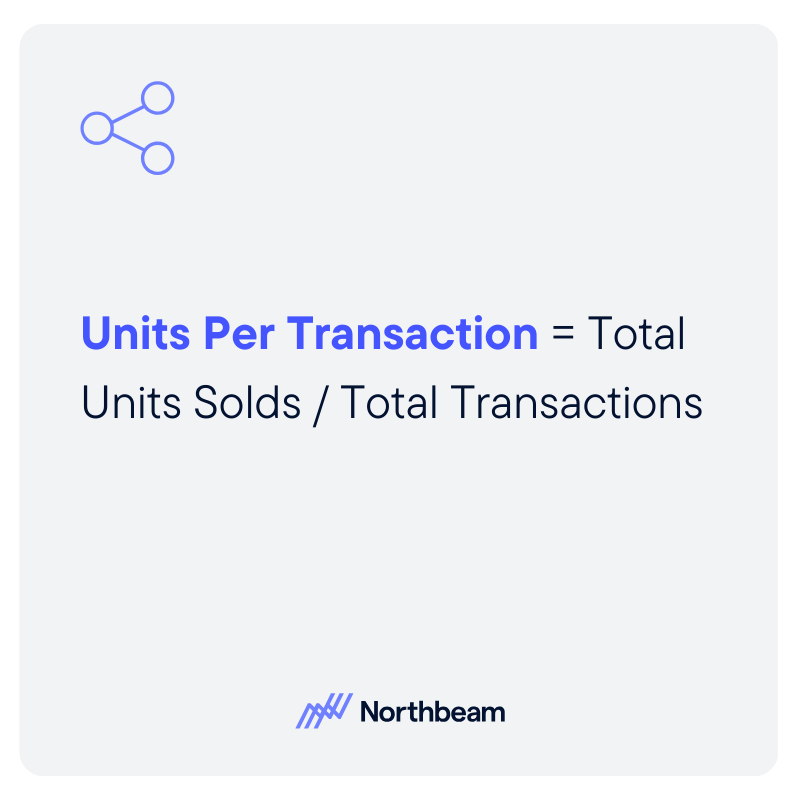
The formula for UPT is: UPT = Total Units Sold ÷ Total Transactions
If you sell 1,200 items across 400 completed purchases, your UPT is 3.0. Meaning that, on average, each transaction includes three items.
“Units” should be clearly defined. A unit typically means an individual sellable item (not a dollar amount). If a customer buys three shirts, that is three units. If you sell bundles or kits, you need a consistent rule. Some retailers count a bundle as one unit because it is sold as a single SKU. Others break it into its component items for internal analysis. The key is consistency.
A “transaction” refers to a completed purchase event. In-store, that means a finalized receipt. Online, it means a confirmed order. Returns complicate the picture: if an item is fully returned, most teams subtract that unit from total units sold in the reporting period. For partial refunds, ensure your system adjusts unit counts accurately.
Common mistakes include mixing gross and net units, failing to account for returns, or inconsistently treating bundles. Clear definitions and standardized reporting prevent inflated or misleading UPT figures.
How UPT Interacts with Other Retail Metrics
UPT does not operate in isolation. It influences, and is influenced by, several other core retail KPIs:
- UPT vs. Average Order Value (AOV): UPT measures how many items are in the basket. While AOV measures how many dollars are in the basket. A retailer can increase AOV by raising prices without changing UPT. Conversely, UPT can rise while AOV stays flat if customers add lower-priced items.
- UPT vs. Conversion Rate: Conversion rate reflects the percentage of visitors who make a purchase. UPT only applies after a purchase occurs. A store may have strong conversion but low UPT, meaning shoppers buy just one item. Optimizing both improves overall revenue efficiency.
- UPT vs. Average Selling Price (ASP): ASP measures the average price per item sold. If ASP drops due to discounting, UPT may rise as customers add more units. However, revenue or margin may not improve proportionally.
Promotions, bundles, and threshold incentives often increase UPT. Price increases may reduce UPT if customers consolidate purchases.
If higher UPT is driven by heavy discounting or low-margin add-ons, gross margin per transaction may decline. Sustainable improvement requires balancing basket size with pricing discipline and margin performance.
How to Increase Units Per Transaction in Stores
Improving UPT in physical retail is largely about influencing behavior at the point of purchase through training, merchandising, and smart incentive design.
Associate Training And Cross-Sell Techniques
Store associates play a direct role in basket size. Training teams to suggest complementary products, ask open-ended questions, and make relevant recommendations can meaningfully increase units per transaction. The goal is not scripted upselling, but helpful guidance that enhances the customer experience.
Product Adjacency And Merchandising Layout
Physical layout shapes buying behavior. Placing complementary products near each other, such as accessories next to core items, increases the likelihood of incremental add-ons. End caps, checkout displays, and curated displays also create natural opportunities to expand baskets.
Bundles And Multi-Buy Promotions
Pre-packaged bundles simplify decision-making and encourage customers to purchase multiple items at once. Multi-buy offers, such as “three for two,” can lift UPT while maintaining perceived value.
Threshold promotions, such as “buy two, save,” can push shoppers to add one more item. However, guardrails are essential. Promotions should protect margin, avoid training customers to wait for discounts, and be measured carefully to ensure long-term profitability.
How to Increase Units Per Transaction in Ecommerce
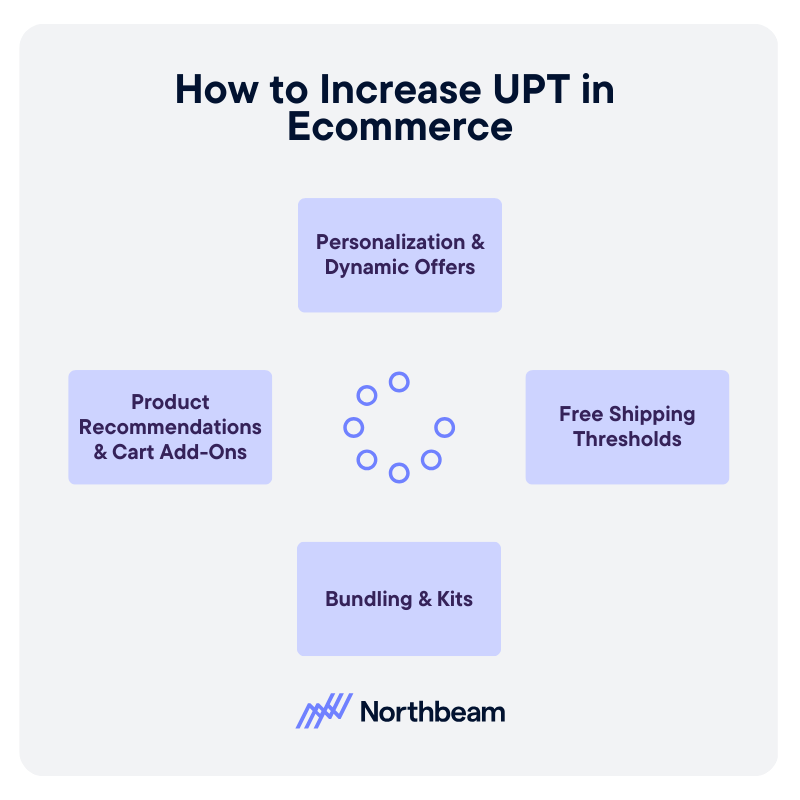
In e-commerce, UPT growth depends on intelligent recommendations, thoughtful incentives, and a frictionless buying experience.
Product Recommendations And Cart Add-Ons
On-site recommendations are one of the most effective digital levers. “Frequently bought together,” “Complete the look,” and in-cart add-on suggestions surface complementary items at moments of high intent. The key is relevance. Irrelevant recommendations reduce trust and lower engagement.
Bundling And Kits
Digital storefronts make it easy to package related products into curated kits. Bundles reduce decision fatigue and increase perceived value while naturally increasing units per transaction. Clear pricing and visible savings strengthen performance.
Free Shipping Thresholds
Shipping thresholds encourage customers to add one more item to qualify for free delivery. When calibrated properly, this tactic lifts UPT without heavy discounting. The threshold should be based on average order value and margin targets.
Personalization And Dynamic Offers
Behavioral data enables personalized recommendations and dynamic cross-sell placements. Returning customers can see tailored suggestions based on browsing or purchase history, increasing basket expansion opportunities.
Too many pop-ups, irrelevant suggestions, or confusing layouts can backfire. UPT strategies should enhance the experience, not interrupt it. Clean design and seamless checkout preserve conversion while encouraging incremental units.
When Not to Push UPT
While increasing UPT can lift revenue, it is not always the right objective. Retail teams must weigh basket growth against margin, customer experience, and long-term loyalty.
Trade-Offs Between UPT And Margin
UPT often rises through discounts, multi-buy offers, or low-priced add-ons. If those incremental units carry thin margins, gross margin per transaction may decline even as basket size grows. A higher UPT that erodes profitability is not sustainable.
Impact On Returns And Customer Satisfaction
Aggressive upselling or forced bundling can increase post-purchase regret. Customers who feel nudged into unnecessary items are more likely to return products, which distorts UPT reporting and increases operational costs.
Long-Term Retention Considerations
Short-term basket expansion should not come at the expense of trust. Retailers that consistently prioritize helpful recommendations over pushy tactics tend to build stronger repeat purchase behavior.
If customers routinely remove recommended add-ons, abandon carts when bundles are required, or show rising return rates, your strategy may be too aggressive.
The most effective UPT strategies enhance value and convenience. When customers perceive recommendations as relevant and beneficial, basket size grows naturally without undermining brand equity.
UPT Measurement & Governance
UPT is most powerful when tracked alongside complementary metrics and governed with clear definitions and discipline.
KPIs To Track Alongside UPT
UPT should never be reviewed in isolation. Pair it with:
- Average Order Value (AOV): Ensures basket size growth translates into revenue.
- Gross Margin Per Transaction: Confirms incremental units are profitable.
- Conversion Rate: Identifies whether basket expansion efforts harm purchase likelihood.
- Return Rate: Flags whether added units lead to post-purchase regret.
- Revenue Per Visitor: Connects traffic, conversion, price, and UPT into one efficiency metric.
Together, these metrics show whether UPT growth is healthy or masking underlying issues.
Diagnostic Checks
Regular analysis helps isolate what is driving change:
- UPT by store, channel, and category
- UPT before and after promotions
- UPT trends across customer segments
Segmenting results prevents broad conclusions based on isolated wins.
Governance Considerations
Strong governance protects data integrity and margin:
- Maintain consistent unit definitions across channels
- Establish a clear reporting cadence
- Implement promotion approval guardrails
Clear ownership and standardized reporting ensure UPT becomes a strategic lever, not a vanity metric.
UPT Implementation Plan
Improving UPT requires structured execution, not isolated tactics. A phased approach ensures sustainable results.
Phase 1: Establish Baseline UPT
Begin by calculating current UPT across stores, channels, and key categories. Break results down by time period and customer segment to identify variability. This baseline creates benchmarks and highlights where performance is strongest or weakest.
Phase 2: Identify High-Impact Opportunities
Analyze where incremental gains are most realistic. For stores, this may include associate training or merchandising adjustments. For e-commerce, it may involve cart recommendations or free shipping thresholds. Prioritize initiatives based on potential lift, margin impact, and ease of execution.
Phase 3: Test And Measure Initiatives
Pilot changes in controlled environments. Test new cross-sell scripts in select stores or adjust recommendation placements on a subset of traffic. Measure UPT alongside AOV, margin per transaction, conversion rate, and return rate to ensure improvements are balanced.
Phase 4: Scale And Standardize
If results are positive and sustainable, roll out initiatives more broadly. Document best practices, align incentives, and maintain consistent reporting. Continuous monitoring ensures UPT growth remains profitable and aligned with brand strategy.
Turning Basket Size Into Sustainable Growth
UPT measures basket size and directly influences retail revenue efficiency. When customers add even one more item per transaction, the impact compounds across stores, channels, and time.
Accurate calculation requires consistent definitions of units and transactions. Without disciplined measurement, UPT can easily be overstated or misunderstood.
Sustainable UPT growth also depends on thoughtful merchandising, effective associate training, and seamless experience design. It works best when optimized alongside margin, conversion rate, and retention, ensuring that basket expansion strengthens profitability and long-term customer trust rather than eroding it.































































.avif)

























%25201.avif)



.avif)













.svg)
