





January 2026 is our first clean look at how ecommerce businesses are entering the new year. The topline story: the median business is still paying more to grow, while the top quartile is turning the same market into cheaper, more efficient acquisition.
In this article, we’re breaking down what happened in January, how typical performance compares to the 75th percentile, and what operators should do with these benchmarks.
How The Typical Business Started 2026
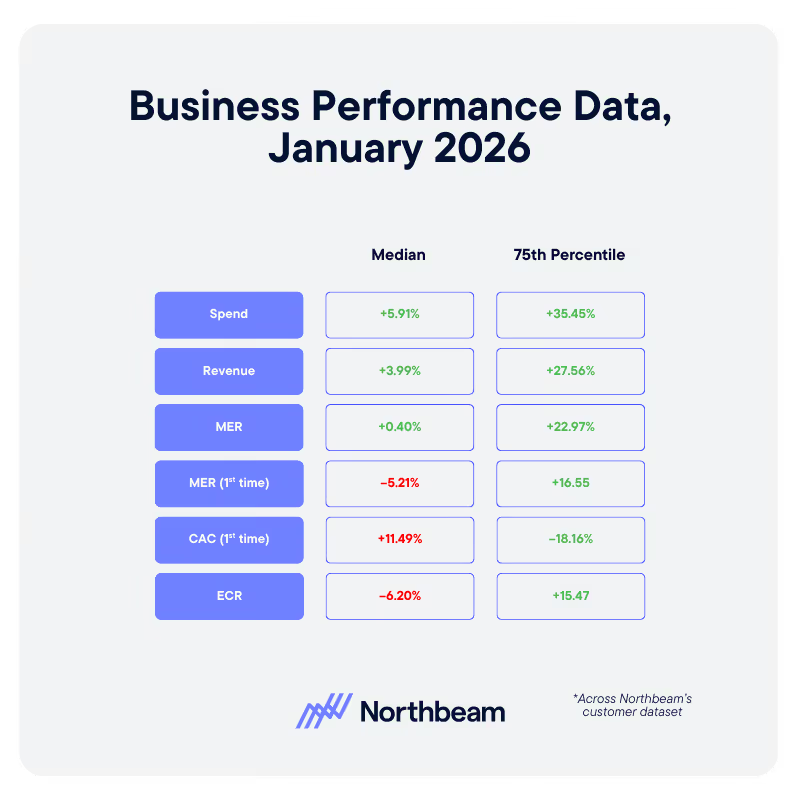
Across Northbeam customers, the median business saw modest growth and worsening new customer economics in January 2026:
There are a few clear implications:
- Businesses increased budgets, but revenue did not keep pace, so blended MER barely moved.
- New customer revenue actually declined, which tells you acquisition was the weak link, not overall demand.
- New customer MER fell and CAC rose, at the same time conversion rate dropped, which is exactly what you see when more spend is chasing lower intent traffic.
If January felt like you were working harder for less convincing performance on first time buyers, these numbers explain why.
What Top Performers Did Differently
The 75th percentile tells a very different story. In the same month, the best performers delivered step change gains in both growth and efficiency:
This is what healthy, scalable growth looks like:
- Revenue nearly kept pace with a very aggressive spend increase.
- Both blended and new customer MER improved, instead of being sacrificed.
- New CAC fell while conversion rate increased, which means these businesses bought better traffic and converted more of it into first time customers at a lower marginal cost.
In other words, January was not just “easier” for the top quartile. They operated with a different set of rules.
Four Levers Behind January’s Top Quartile
1. What 2025 Told Us: Creative Systems Built For Higher Spend
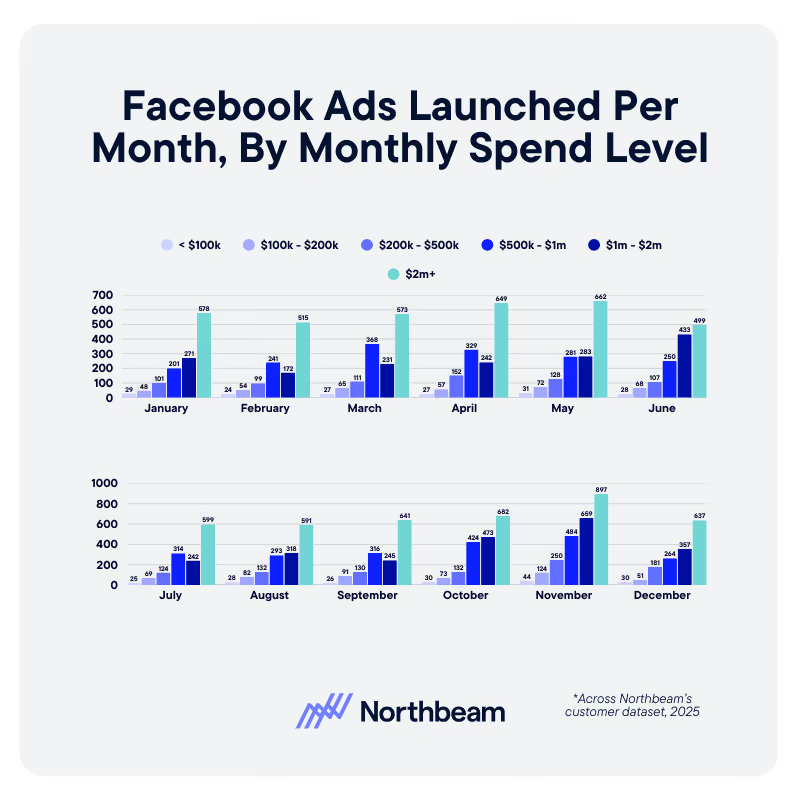
Higher budgets only work if your creative pipeline can support them. Our 2025 data showed a clear relationship between spend bands and ad volume: businesses that spent more launched dramatically more ads, especially on platforms like Meta and TikTok.
In January 2025, the top quartile looked like businesses that had already internalized this:
- They committed to a minimum number of new concepts per week based on their monthly spend, instead of trying to stretch a single winning ad across the month.
- They treated creative capacity as a strategic constraint, budgeting time and resources accordingly.
- They used an attribution source of truth to decide which ideas earned scale, instead of relying on noisy in platform metrics alone.
The result is visible in the benchmarks: higher spend, higher conversion, and lower CAC at the same time.
Higher budgets only work if your creative pipeline can support them.
In January 2026, the top quartile’s results are exactly what you would expect from businesses that took that lesson seriously
Download the full Northbeam 2025 data report.
2. Clear Guardrails On MER And CAC
Median businesses nudged budgets up and accepted whatever economics the market delivered. Top performers acted as if MER and CAC were hard constraints, not nice to have metrics.
Practically, that means:
- Defining MER floors that reflect contribution margin and cash needs, not arbitrary targets.
- Setting CAC ceilings by product or AOV band, so you never let auction pressure quietly erase unit profit.
- Wiring these thresholds into weekly operating views so violations trigger action, not end of month surprises.
You cannot control the market, but you can control how much pain you are willing to tolerate before you pull back.
3. First Time Performance As A Separate Scorecard
In the January aggregate, blended metrics do not tell the full story. Revenue is up a little, MER is flat to slightly positive, and it would be easy to decide you are fine. New customer metrics say otherwise.
Top performers watched first time economics independently:
- First Time MER, First Time CAC, and First Time Revenue sat next to blended metrics in every core report.
- Any period where revenue grew while first time MER fell was treated as a problem, not a win.
- Channels, campaigns, and creative were evaluated on whether they added net new customers at an acceptable price, not just whether they pushed blended MER up for a week.
That discipline shows up directly in the January gap between median and 75th percentile new customer performance.
4. Smarter Use Of January As A Calendar Moment
January is not just “month one” on a clean slate. It is a very specific demand environment: resolution season in some verticals, hangover season in others, and a reset after Q4 promo pressure.
The data suggests that:
- In categories where Q1 demand is structurally strong, winning businesses leaned into January but kept CAC and payback rules tight, instead of assuming last year’s promo economics would hold forever.
- In more fragile verticals, they treated January as a controlled test month for offers and creative, not as a place to force topline at any cost.
- Across the board, they judged January performance against their own category and size cohort, not generic ecommerce averages.
That is why you see top performers able to add new revenue at lower CAC even as the median business struggles.
How To Use These Benchmarks In Your Own Planning
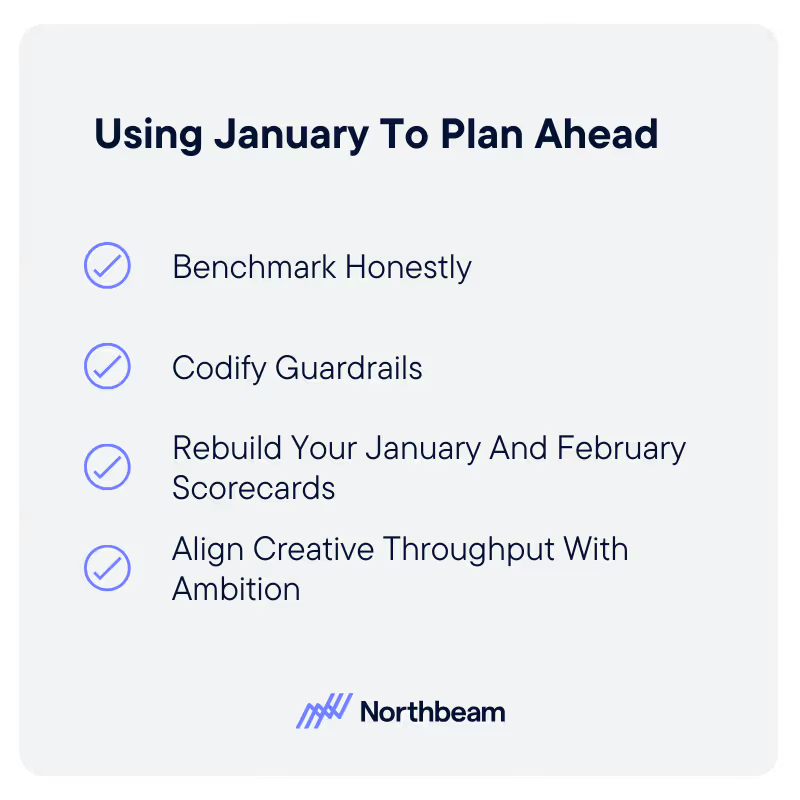
You cannot copy the exact numbers from the 75th percentile, but you can copy the operating patterns that got them there. A practical way to work with the January 2026 data:
- Benchmark Honestly
- Compare your January shifts in spend, revenue, MER, new revenue, new MER, CAC, and conversion rate to both the median and 75th percentile views.
- Decide whether you are closer to “typical” or “top quartile” and why.
- Codify Guardrails
- Turn those comparisons into explicit floors for MER and ceilings for CAC, with separate lines for blended and first time performance.
- Use them to shape bids, budgets, and channel mix from February onward, instead of treating them as a one time post mortem.
- Rebuild Your January And February Scorecards
- Put first time MER, first time CAC, and new revenue on the same level as blended MER in dashboards.
- Flag any week where new customer economics deteriorate while topline looks fine, and react quickly instead of waiting for a quarter end review.
- Align Creative Throughput With Ambition
- If you plan to push budgets meaningfully above January levels, lock in the creative volume that will be required to keep CAC from drifting up.
- Make sure you have the measurement in place to identify which ideas deserve scale and which should be cut early.
The Takeaway For 2026
January 2026 shows two very different realities inside the same market. The median business nudged spend up, saw modest revenue growth, and watched new customer economics slip. The top quartile increased budgets aggressively, grew faster, and improved efficiency at the same time.
The difference is not access to some secret channel. It is whether you are willing to run the year on explicit guardrails, separate scorecards for first time performance, calendar aware planning, and creative systems that can actually support the spend level you want.
If you get those four pieces right, the January 2026 benchmarks stop being a warning and start becoming a baseline for what your own growth can look like over the rest of the year.














































.avif)
























%25201.avif)


.avif)














.svg)
